Welcome to this week’s edition of The Weekly Call, your trusted source for high-quality commodity setups and trading strategies. Since October 2016, our approach has delivered an impressive 777% return, and we continue to share the insights and methodologies that drive these results with this post #525. This week, we’ll explore the latest market trends, actionable trade setups, and global economic factors influencing commodities like sugar, coffee, live cattle, and gold.
U.S. Markets (Friday, September 11 Close)
S&P 500: Closed at 7,656.98, gaining approximately 0.9% Friday but declining about 0.8% for the week.
Nasdaq Composite: Closed at 26,333.04, rising approximately 1.0% Friday while finishing roughly 0.7% lower for the week.
Dow Jones Industrial Average: Closed at 52,573.29, gaining approximately 1.0% Friday but declining about 1.6% for the week.
U.S. equities rebounded strongly Friday after four consecutive down sessions, but the recovery was not enough to erase the week’s losses.
The market remained dominated by inflation, oil prices, Treasury yields, and expectations surrounding this week’s Federal Reserve meeting.
August CPI increased 0.4% for the month and 3.4% year over year, reinforcing expectations that the Federal Reserve will raise rates by 25 basis points.
The 10-year Treasury yield approached 5.0%, while the 2-year yield moved above 4.6%, creating renewed pressure on growth stocks, housing, and other interest-rate-sensitive assets.
Friday’s decline in oil provided some relief and helped equities recover into the close.
Global Markets
FTSE 100 (United Kingdom): Finished near 10,650, declining modestly for the week as higher global yields and energy-price volatility pressured equities.
DAX (Germany): Finished near 25,570, remaining volatile as investors balanced stronger industrial activity against tighter European monetary policy.
Nikkei 225 (Japan): Closed near 64,000, declining sharply Friday as semiconductor and technology stocks weakened.
Shanghai Composite (China): Finished near 3,890, declining as investors remained cautious about domestic demand, property markets, and slowing global growth.
Global markets were broadly pressured by rising bond yields and renewed inflation concerns.
The European Central Bank moved further toward tighter monetary policy as energy prices increased inflation pressure.
Japan remains an important global risk factor because expectations for additional Bank of Japan tightening are encouraging capital to return toward domestic bonds and strengthening the yen.
Commodities Snapshot
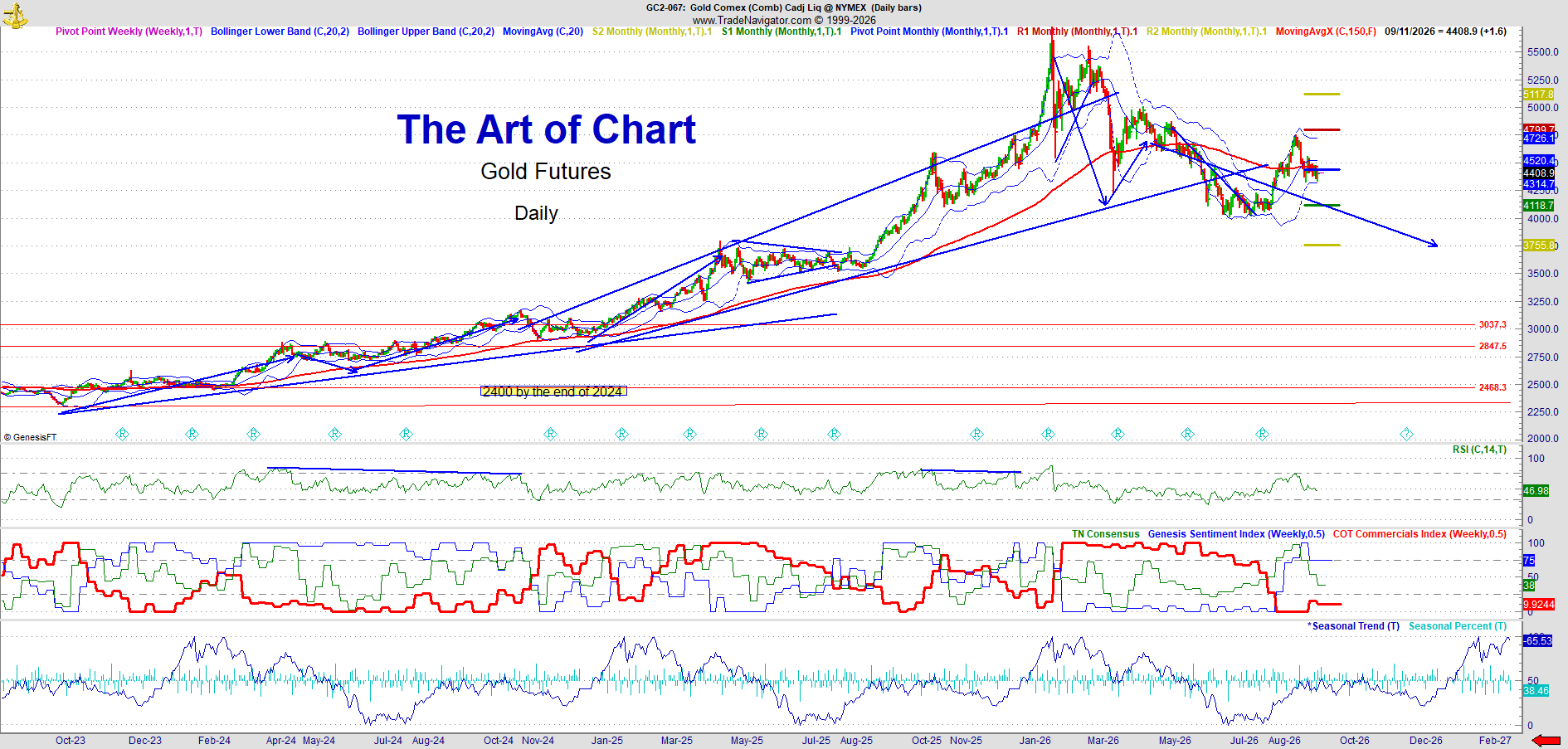
Gold: Approximately $4,360–$4,380/oz, rebounding Friday but still finishing lower for the week.
Silver: Approximately $64–$65/oz, remaining historically elevated but below recent highs.
Copper: Approximately $6.45–$6.60/lb, retreating from recent records but remaining strongly supported by electrification, grid expansion, manufacturing, and AI infrastructure.
WTI Crude Oil: Settled at $100.05/barrel, declining Friday but still gaining more than 8% for the week.
Brent Crude Oil: Settled at $104.61/barrel, falling nearly 3% Friday but still recording another very strong weekly advance.
Natural Gas: Approximately $2.90–$3.00/MMBtu, remaining comparatively stable despite extreme volatility in crude oil.
Oil was the dominant commodity story.
Middle East attacks and disruptions across both the Strait of Hormuz and Red Sea shipping routes pushed crude above $100 during the week.
U.S. diesel prices also moved above $6 per gallon nationally, creating a meaningful inflation risk for transportation, agriculture, manufacturing, and consumer goods.
Gold and silver remained supported by fiscal and geopolitical uncertainty, although higher real yields continued limiting upside momentum.
Cryptocurrency Market (Sunday, September 13)
Bitcoin (BTC): Approximately $77,300–$77,500, holding above the major August breakout zone despite higher Treasury yields and rising Fed hike expectations.
Ethereum (ETH): Approximately $2,500–$2,530, showing better relative strength than Bitcoin and maintaining the important $2,500 area.
Solana (SOL): Approximately $101–$102, continuing to hold above the key $100 level.
XRP: Approximately $1.36–$1.38, stabilizing after a volatile week.
BNB: Approximately $730–$735, maintaining strong relative momentum.
Cardano (ADA): Approximately $0.208–$0.210, holding near $0.20 support.
Dogecoin (DOGE): Approximately $0.084–$0.085, consolidating as speculative activity cooled.
Hyperliquid (HYPE): Approximately $79–$81, remaining one of the most important decentralized derivatives assets despite recent volatility.
Crypto markets remained surprisingly resilient despite tightening financial conditions.
Bitcoin declined modestly during the week but stayed well above the $72,000–$74,000 breakout zone established in August.
Ethereum showed improving relative strength, while Solana and BNB remained among the strongest large-cap altcoins.
Key Market Drivers
- August CPI remained too high. Consumer prices rose 0.4% month over month and 3.4% year over year.
- Federal Reserve hike expectations moved sharply higher. Markets now assign approximately an 85% probability of a September rate increase.
- Treasury yields approached 5%. Higher yields remain one of the largest risks to equity and crypto valuations.
- Oil remained above $100. Middle East disruptions continued creating a major inflation threat.
- Diesel prices reached record levels. Higher transportation costs could begin feeding through to food, manufacturing, and consumer prices.
- Equities recovered Friday as oil retreated. Lower crude prices provided temporary relief from inflation concerns.
- Software and AI shares remained volatile. Investors continue demanding measurable returns from aggressive AI spending.
- Oracle remained an important cloud indicator. Strong cloud growth supported confidence in enterprise AI infrastructure demand despite broader market volatility.
- Bitcoin remained resilient. BTC held the upper-$70,000 area despite higher yields and reduced ETF demand.
- Ethereum institutional demand strengthened. ETH ETF flows improved even as Bitcoin ETF flows weakened.
The market’s central conflict is increasingly clear: corporate earnings and economic activity remain healthy, but inflation and energy prices are forcing central banks to remain restrictive.
Emerging Crypto Projects & Ecosystem News
- Nasdaq invested $100 million in Kraken parent Payward. The partnership is aimed at developing institutional infrastructure for tokenized equities and blockchain-based securities trading.
- Tokenized equities moved closer to mainstream adoption. Nasdaq and Kraken are developing systems designed to preserve traditional investor protections while enabling blockchain settlement and extended trading hours.
- U.S. Bancorp completed a live bank-issued stablecoin transaction. The transaction used its USBDC token and demonstrated cross-border settlement between regulated banking entities.
- Stellar gained another institutional use case. The U.S. Bancorp pilot used Stellar for minting, redemption, transaction controls, and settlement.
- Bank-issued stablecoins continue advancing. Traditional financial institutions are moving beyond experiments toward actual blockchain-based cash and settlement products.
- The CLARITY Act reaches a critical point this week. The Senate is expected to revisit the legislation as lawmakers debate SEC versus CFTC authority, stablecoin rewards, DeFi treatment, and anti-money-laundering requirements.
- Tokenized Treasury and money-market products continue expanding. These remain among the most practical institutional blockchain applications.
- Real-world asset tokenization continues accelerating. Equities, private credit, commodities, Treasury securities, and investment funds increasingly use blockchain-based issuance and settlement.
- Chainlink remains strategically important. Cross-chain interoperability, pricing data, proof-of-reserves, and settlement infrastructure continue becoming essential as institutions operate across multiple blockchain networks.
- Hyperliquid remains an important emerging institutional theme. Decentralized perpetual futures continue gaining market share and attention from regulated trading platforms.
The strongest digital-asset themes remain Bitcoin, Ethereum, Solana, regulated stablecoins, tokenized bank deposits, tokenized securities, institutional custody, decentralized derivatives, interoperability, and blockchain-based settlement.
Outlook for the Week Ahead
- Federal Reserve meeting: This is the week’s most important event. Markets strongly expect a 25-basis-point rate increase.
- Fed guidance: Investors will focus on whether the September move is a one-time adjustment or the beginning of another tightening cycle.
- Treasury yields: A sustained move above 5% on the 10-year would create additional pressure on equities, housing, and crypto.
- Oil: Middle East disruptions remain the largest near-term inflation risk.
- Retail sales: Consumer data will provide another indication of whether higher fuel prices and interest rates are beginning to weaken spending.
- Artificial intelligence: Markets will continue focusing on software, cloud computing, semiconductors, data centers, power infrastructure, and enterprise AI demand.
- Dreamforce: Salesforce’s annual conference will provide another important look at enterprise AI adoption and spending.
- Japan: The Bank of Japan may also tighten policy, increasing the possibility of a globally synchronized rate-hike cycle.
- Cryptocurrency: Bitcoin’s ability to defend the mid-$70,000 area during a Fed hike will be the most important technical test.
- Crypto regulation: The CLARITY Act, tokenized securities, stablecoin policy, and institutional banking adoption remain major catalysts.
Key Levels to Watch
S&P 500: Support 7,550–7,600 | Resistance 7,700–7,750
Nasdaq Composite: Support 26,000–26,100 | Resistance 26,500–26,600
Bitcoin: Support $75,000–$76,000 | Major Support $72,000–$74,000 | Resistance $79,000–$80,000
Ethereum: Support $2,425–$2,475 | Resistance $2,550–$2,600
Solana: Support $98–$100 | Resistance $105–$110
Gold: Support $4,300–$4,325 | Resistance $4,450
Silver: Support $62–$63 | Resistance $66–$68
Copper: Support $6.40–$6.50 | Resistance $6.75–$6.90
WTI Crude Oil: Support $97–$100 | Resistance $105–$110
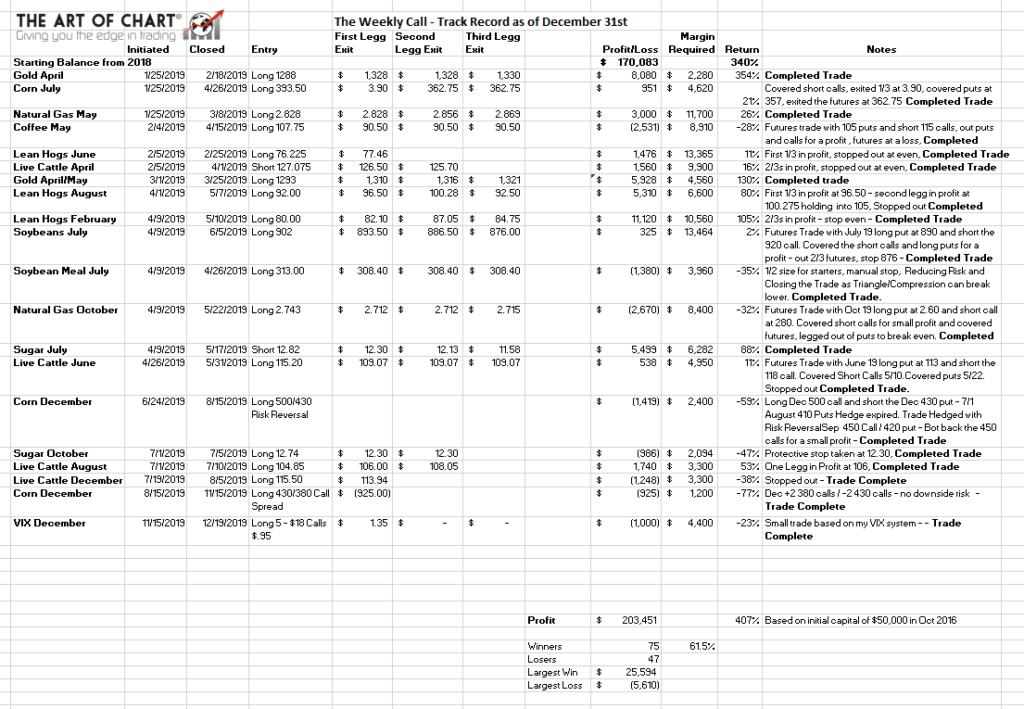
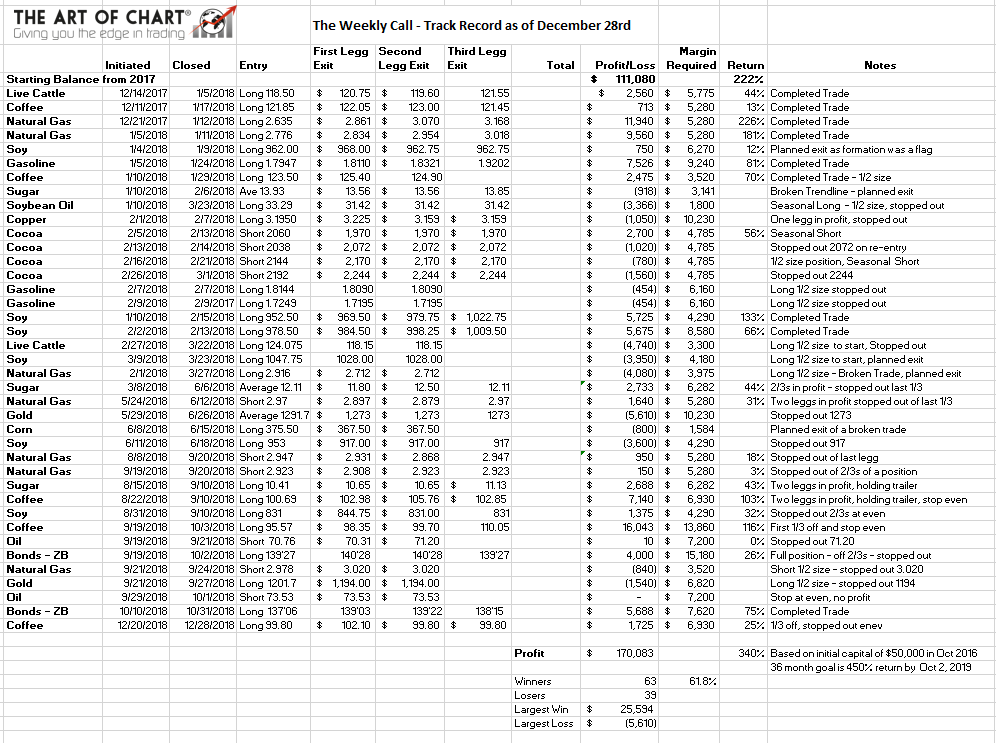
As always, stay informed and adjust your strategies based on the evolving market conditions. All trades are posted on our Private Twitter Feed for subscribers and are included in the track record posted below under Completed Trades. I am currently trading 15 lots given the account balance and will adjust as necessary based on market developments.
Trading futures contracts and commodity options involves substantial risk of loss, and may not be appropriate for all investors. Past performance is no guarantee of future results. Please see our Disclaimer for more information.
The trades below are discussed on the Daily Update: – Click Here for a FREE Trial
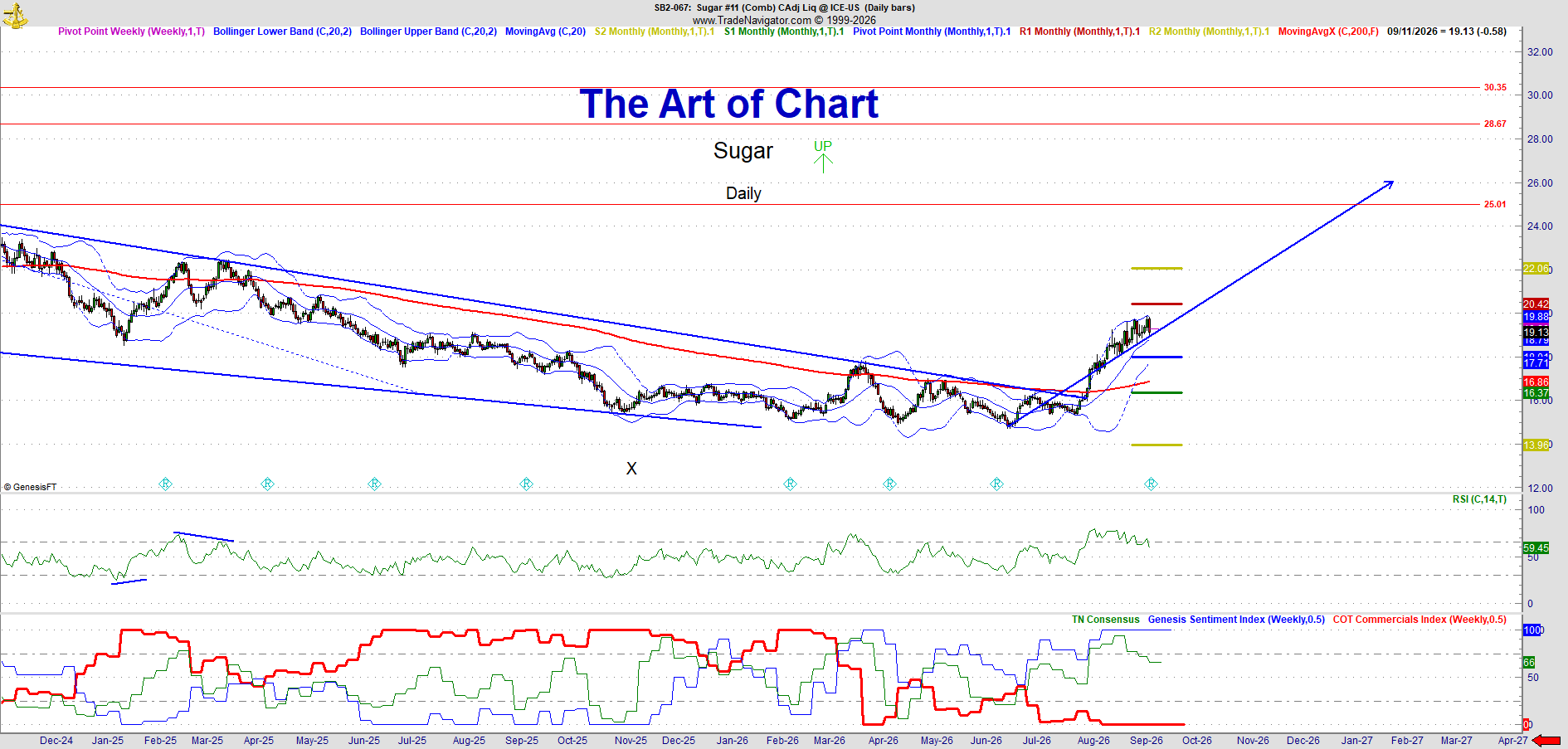
Sugar
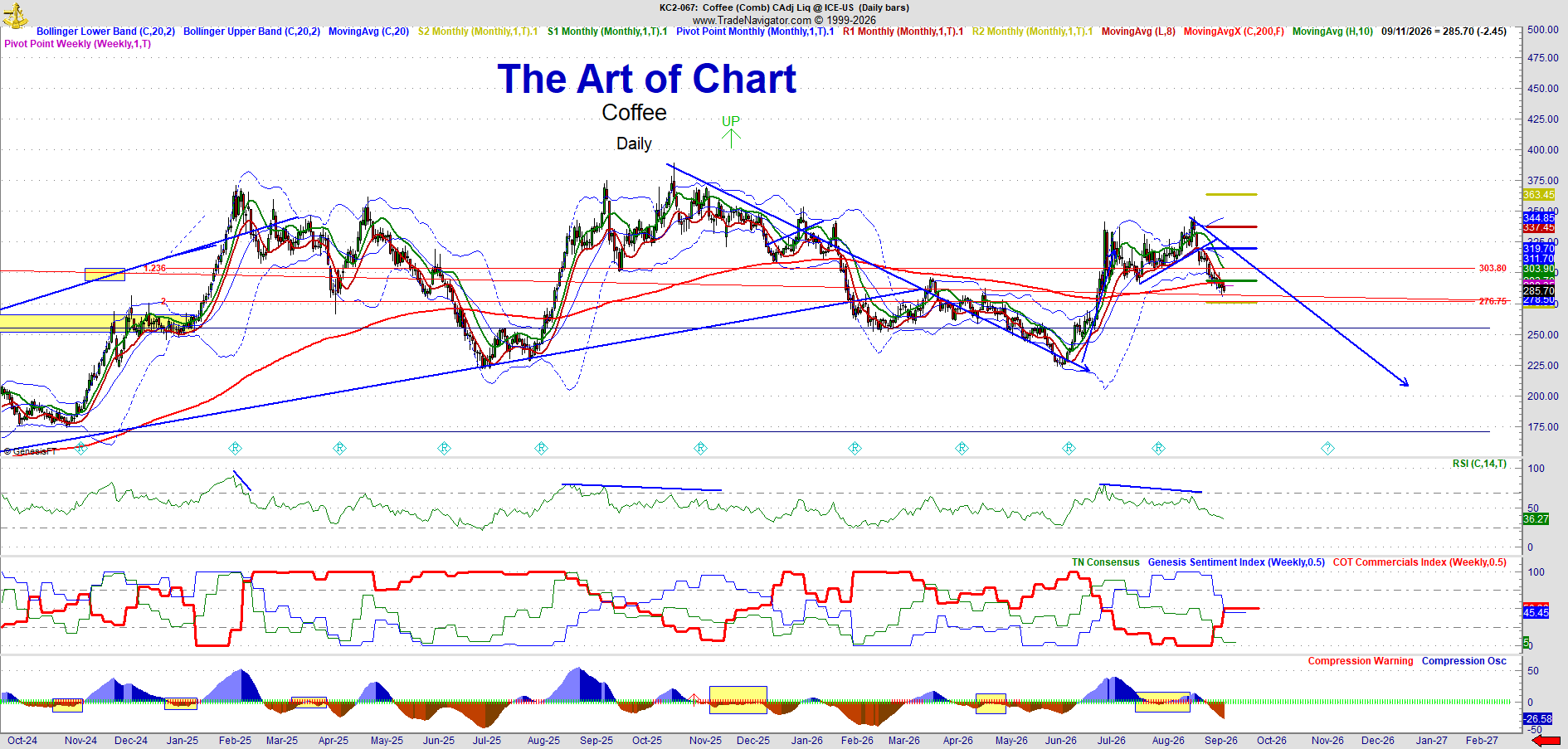
Coffee
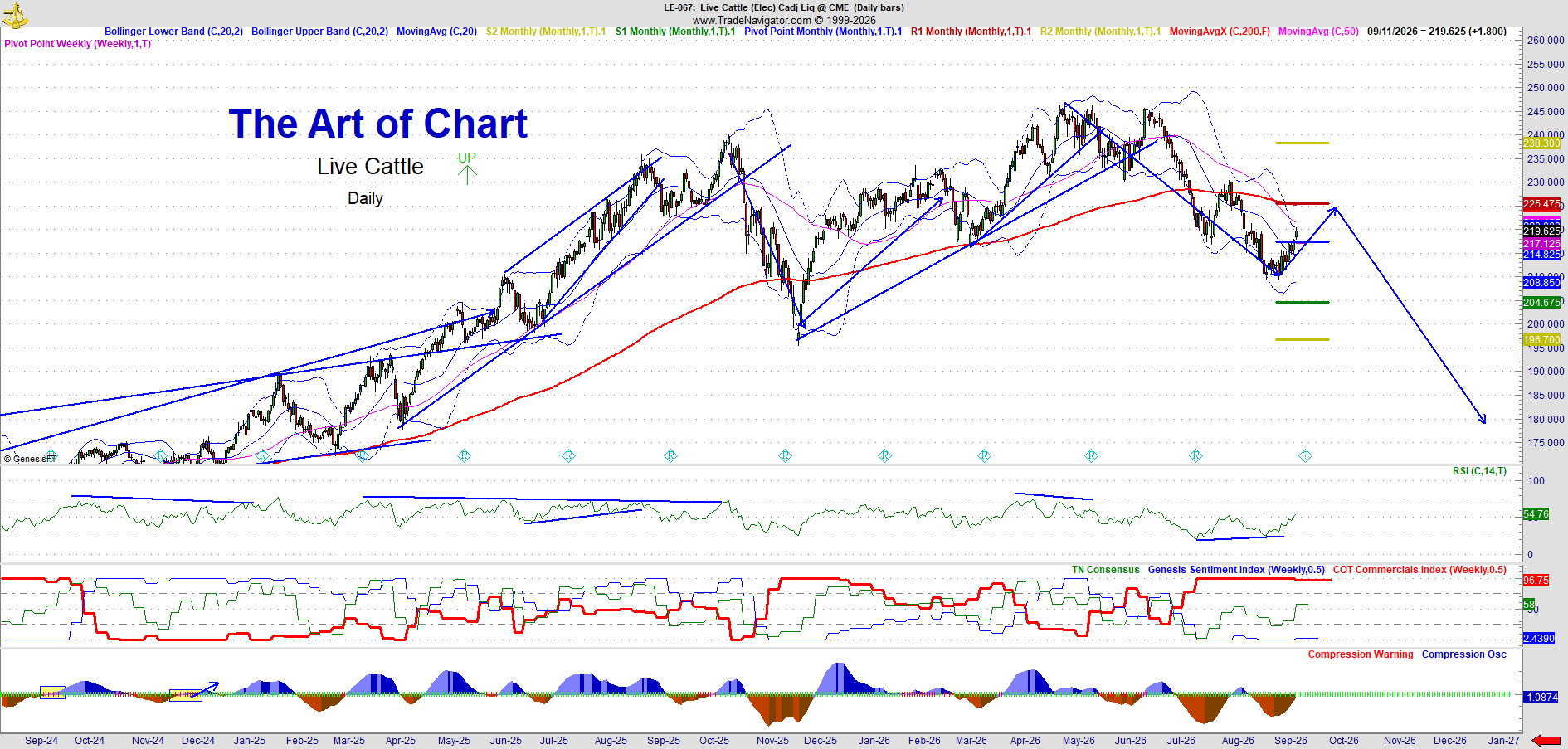
Live Cattle
Gold (GC)
Come see what we are trading – Try our 30 day FREE trial – Click Here
COMPLETED TRADES
Track Record of Completed Trades
The purpose of this blog is to demonstrate how to swing trade futures using our methodology to select high-quality setups and manage the trade with our risk management approach. This track record is based on entries and exits as posted in this blog. I am currently using 15 lots for the Striker trades which is based on this account being over $375,000. Each lot for auto trading at Striker requires $25,000 per lot. See the videos below for more information.
Track Record January 2022 thru December 2022 Click Here.
Track Record January 2021 thru December 2021 Click Here.
Track Record January 2020 thru December 2020 Click Here.
Track Record January 2019 thru December 2019 Click Here.
Track Record January 2018 thru December 2018 Click Here.
Track Record October 2016 – December 2017 Click Here.
*** Trading futures contracts and futures options involves substantial risk of loss, and may not be appropriate for all investors. By reading this web site, you acknowledge and accept that all trading decisions are your sole responsibility. Trading strategies referenced on this web site and associated documents and emails are only suggestions, no representation is being made that they will achieve profits or losses. Past performance is no guarantee of future results.. See our disclaimer here.
Completed trade in Cattle as of November 28th
We expect subscribers to have captured 60% of the swing in live cattle which is over $14,500 in profit using a margin of only $5,115. A great example of using leverage in futures.
Completed Trade in Coffee as of December 12th
The total swing was $37.00 and we expect subscribers to have captured 60% of a wing or $22 in coffee for a profit of over $25,500 using a margin of $8,850. A great example of using leverage in futures. See the video below for the review of the trade.
Completed Trade in Natural Gas as of January 2nd
We were stopped out of out last 1/3 position as weather-related news created a gap down on January 2nd and a possible flat with support at 3.196. This concludes our trade with natural gas; we exit with 550 ticks on 2/3s of a position with $8,500 in profit.
Completed Trade in Coffee as of January 19th
We exited the coffee trade on January 19th with $17 or over $15,000 in profit using a margin of $8,850. A great example of using leverage in futures.
Completed Trade in Gold as of February 8th
We exited the gold trade on February 8th with over $14,000 in profit. We entered on January 3rd and held the trade into the high window. We will re-enter gold in a few weeks after a backtest.
 13th Sep 2026