Welcome to this week’s edition of The Weekly Call, your trusted source for high-quality commodity setups and trading strategies. Since October 2016, our approach has delivered an impressive 777% return, and we continue to share the insights and methodologies that drive these results with this post #524. This week, we’ll explore the latest market trends, actionable trade setups, and global economic factors influencing commodities like sugar, coffee, live cattle, and gold.
U.S. Markets (Friday, September 4 Close)
S&P 500: Closed at 7,718.60, declining approximately 0.4% Friday but finishing the week about 0.1% higher.
Nasdaq Composite: Closed at 26,506.99, falling approximately 0.3% Friday while gaining roughly 0.4% for the week.
Dow Jones Industrial Average: Closed at 53,414.25, declining approximately 0.5% Friday and about 0.3% for the week.
U.S. stocks ended Friday lower after an unexpectedly strong August employment report increased the probability that the Federal Reserve could raise interest rates at its September meeting.
The economy added 162,000 jobs in August, significantly above expectations, while unemployment remained at 4.1%. Earlier employment estimates were also revised higher.
The report immediately changed rate expectations. Markets moved toward roughly a 60% probability of a 25-basis-point September increase.
Treasury yields moved sharply higher, with the 2-year yield near 4.37% and the 10-year yield approaching 4.8%.
Despite the rise in yields, semiconductor stocks remained relatively strong, demonstrating that artificial-intelligence infrastructure demand continues to offset some of the pressure created by tighter financial conditions.
Global Markets
FTSE 100 (United Kingdom): Finished near 10,830, ending the week relatively flat as strength in industrials and selected defensives offset bond-market concerns.
DAX (Germany): Finished modestly higher as semiconductor, industrial, and software shares remained resilient.
Nikkei 225 (Japan): Closed near 64,500, remaining historically elevated despite greater volatility in Japanese bond yields.
Shanghai Composite (China): Finished modestly lower as continued government support was offset by concerns surrounding property, consumer demand, and private-sector credit growth.
Global markets are increasingly being driven by interest rates and sovereign bond markets.
Long-term yields remain elevated across the United States, Europe, and Japan as investors evaluate persistent inflation, growing government borrowing requirements, and central-bank policy.
Japan remains particularly important because higher domestic yields could gradually encourage Japanese investors to reduce overseas bond exposure and return capital to domestic markets.
Commodities Snapshot
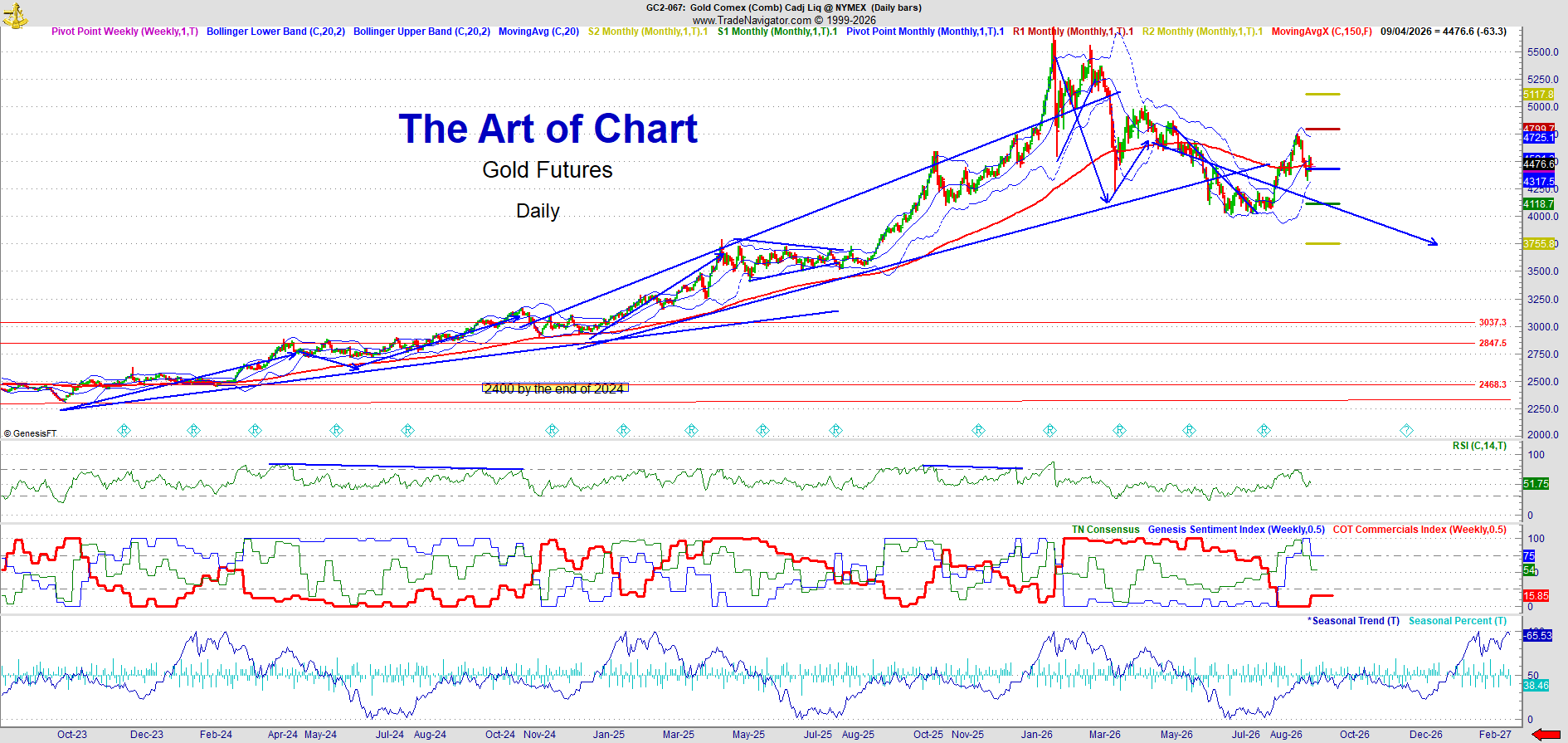
Gold: Approximately $4,420/oz, pulling back after Friday’s strong employment report increased expectations for tighter Federal Reserve policy.
Silver: Approximately $65–$66/oz, also declining Friday but remaining historically elevated.
Copper: Approximately $6.60–$6.70/lb, remaining near record territory as physical supply constraints and structural infrastructure demand continue supporting prices.
WTI Crude Oil: Settled near $91.48/barrel, gaining almost 10% for the week.
Brent Crude Oil: Settled near $96.28/barrel, advancing roughly 7.6% for the week.
Natural Gas: Approximately $2.90/MMBtu, remaining comparatively subdued.
Oil was the largest commodity development of the week.
Renewed U.S.-Iran military activity, disruptions around the Strait of Hormuz, and Ukrainian attacks on Russian refining infrastructure pushed crude prices sharply higher.
U.S. diesel prices also moved to record territory, creating another potential inflation problem for transportation, agriculture, manufacturing, and consumer goods.
Gold and silver remain attractive longer-term fiscal and geopolitical hedges, but Friday demonstrated that higher real yields can create rapid short-term corrections.
Cryptocurrency Market (Sunday, September 6)
Bitcoin (BTC): Approximately $79,900, remaining just below the key $80,000 level.
Ethereum (ETH): Approximately $2,495, holding near $2,500 and maintaining its strong August recovery.
Solana (SOL): Approximately $106, remaining above the important $100 level.
XRP: Approximately $1.41, consolidating after its strong summer rally.
BNB: Approximately $751, gaining strongly over the past week and demonstrating excellent relative strength.
Cardano (ADA): Approximately $0.221, remaining firm after its August recovery.
Dogecoin (DOGE): Approximately $0.090, holding near recent highs as speculative participation remains healthy.
Bitcoin continues to show notable resilience.
The stronger employment report pushed Treasury yields higher and increased the probability of another Federal Reserve rate increase, yet Bitcoin remains close to $80,000.
The more important development continues to be participation beyond Bitcoin. Ethereum, Solana, BNB, Cardano, Dogecoin, and several DeFi assets remain materially stronger than they were earlier this summer.
Key Market Drivers
- August payrolls surged by 162,000. The result dramatically exceeded expectations and strengthened the argument that the U.S. economy remains resilient.
- Federal Reserve rate-hike expectations increased. Markets now assign roughly a 60% probability of a September increase.
- Treasury yields moved higher. The 10-year Treasury approached 4.8%, increasing pressure on high-valuation growth companies.
- Oil surged almost 10%. Renewed Middle East conflict returned energy inflation to the center of the macroeconomic discussion.
- Diesel prices reached record levels. Transportation and agricultural fuel costs could begin feeding back into consumer inflation.
- Artificial-intelligence demand remained strong. Semiconductors again demonstrated resilience despite higher bond yields.
- Broadcom remained an important AI test. Investors continued focusing on custom AI accelerators, networking, and hyperscale data-center demand.
- Lululemon fell sharply after lowering guidance. The decline reinforced concerns that discretionary consumers are becoming increasingly selective.
- Software valuations remained sensitive. Adobe weakened following a leadership transition, demonstrating continued vulnerability in expensive software shares.
- Bitcoin held near $80,000 despite tighter financial conditions. That relative strength remains one of the most constructive signals in the digital-asset market.
The market’s central conflict is increasingly straightforward: the economy is stronger than expected, but that strength increases the probability of additional monetary tightening.
Emerging Crypto Projects & Ecosystem News
- Twenty-one major financial institutions announced plans for a joint U.S. dollar stablecoin. Goldman Sachs, Bank of America, Citi, Deutsche Bank, and other global institutions are developing a regulated dollar-backed token targeted for launch in 2027.
- Bank-issued stablecoins are becoming a serious competitive threat. Traditional financial institutions are moving from experimentation toward direct participation in blockchain-based payments and settlement.
- The London Stock Exchange announced plans for tokenized UK equities. LSEG is partnering with Kraken parent Payward to develop blockchain-based versions of UK-listed stocks.
- Tokenized equities could eventually support 24-hour markets. The initiative is designed to combine traditional securities ownership with blockchain-based settlement and extended trading.
- Coinbase filed to offer equity perpetuals in the United States. The proposed products would bring another crypto-native trading structure into conventional equity markets.
- Stablecoin adoption continues expanding beyond crypto. Payments, treasury management, settlement, cross-border transfers, and institutional liquidity are becoming core applications.
- Tokenized Treasury securities and money-market funds continue growing. These products remain among the most practical institutional uses of blockchain.
- Real-world asset tokenization continues expanding. Private credit, equities, bonds, commodities, real estate, and investment funds continue migrating toward blockchain-based issuance.
- Chainlink remains strategically important to institutional tokenization. Pricing, proof-of-reserves, cross-chain interoperability, and settlement infrastructure become increasingly valuable as institutions use multiple networks.
- DeFi participation improved during the week. Uniswap and several decentralized-finance platforms experienced stronger trading activity as investors moved further out on the risk curve.
- Stablecoin regulation remains a major policy issue. The interaction between bank deposits, privately issued stablecoins, payment tokens, and monetary policy is becoming increasingly important to regulators.
The strongest long-term digital-asset themes remain Bitcoin, Ethereum, Solana, regulated stablecoins, tokenized deposits, tokenized securities, institutional custody, interoperability, and blockchain-based financial settlement.
Outlook for the Week Ahead
- Consumer Price Index: CPI becomes the most important economic release before the Federal Reserve meeting. A hotter reading could push September hike odds significantly higher.
- Producer Price Index: PPI will show whether rising energy and transportation costs are beginning to flow through the supply chain.
- Federal Reserve: The September meeting is now effectively live, with investors divided over another quarter-point increase.
- Treasury yields: Bond-market volatility remains one of the greatest risks to equity valuations.
- Oil and Iran: Middle East developments remain capable of creating additional inflation and market volatility.
- Apple product event: Investors will evaluate Apple’s hardware cycle, AI strategy, and broader ecosystem growth.
- Oracle earnings: Oracle remains an important indicator of enterprise cloud and AI infrastructure demand.
- Adobe earnings: Software valuations and AI monetization remain critical themes.
- Cryptocurrency: Bitcoin’s ability to hold the high-$70,000 range despite tightening financial conditions remains the most important technical signal.
- Crypto regulation: Stablecoin policy, tokenization initiatives, and September congressional activity remain important institutional catalysts.
Key Levels to Watch
S&P 500: Support 7,625–7,650 | Resistance 7,775–7,800
Nasdaq Composite: Support 26,200–26,300 | Resistance 26,700–26,800
Bitcoin: Support $77,000–$78,000 | Major Support $74,000–$75,000 | Resistance $80,500–$82,000
Ethereum: Support $2,400–$2,425 | Resistance $2,500–$2,550
Solana: Support $100–$102 | Resistance $110–$115
Gold: Support $4,300–$4,350 | Resistance $4,500
Silver: Support $63–$64 | Resistance $68–$70
Copper: Support $6.50–$6.55 | Resistance $6.75–$6.80
WTI Crude Oil: Support $88–$90 | Resistance $95–$100
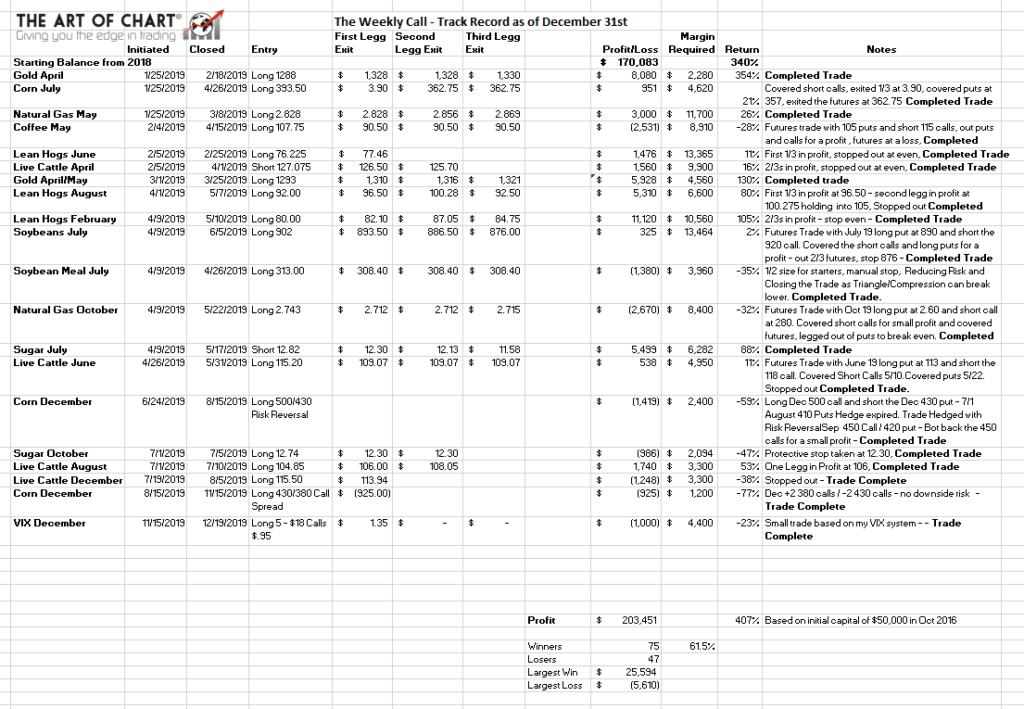
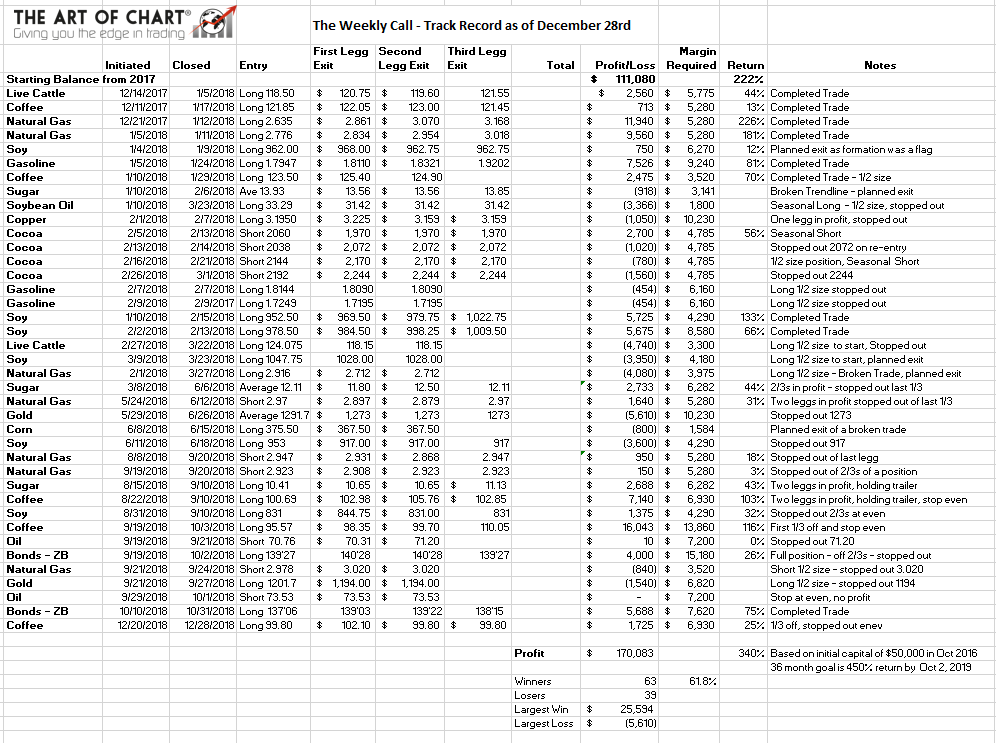
As always, stay informed and adjust your strategies based on the evolving market conditions. All trades are posted on our Private Twitter Feed for subscribers and are included in the track record posted below under Completed Trades. I am currently trading 15 lots given the account balance and will adjust as necessary based on market developments.
Trading futures contracts and commodity options involves substantial risk of loss, and may not be appropriate for all investors. Past performance is no guarantee of future results. Please see our Disclaimer for more information.
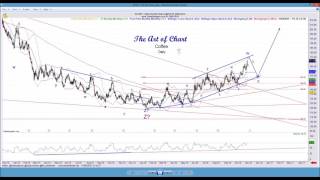
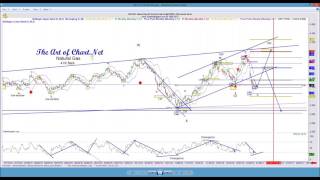
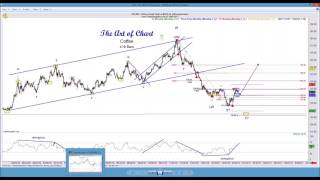
The trades below are discussed on the Daily Update: – Click Here for a FREE Trial
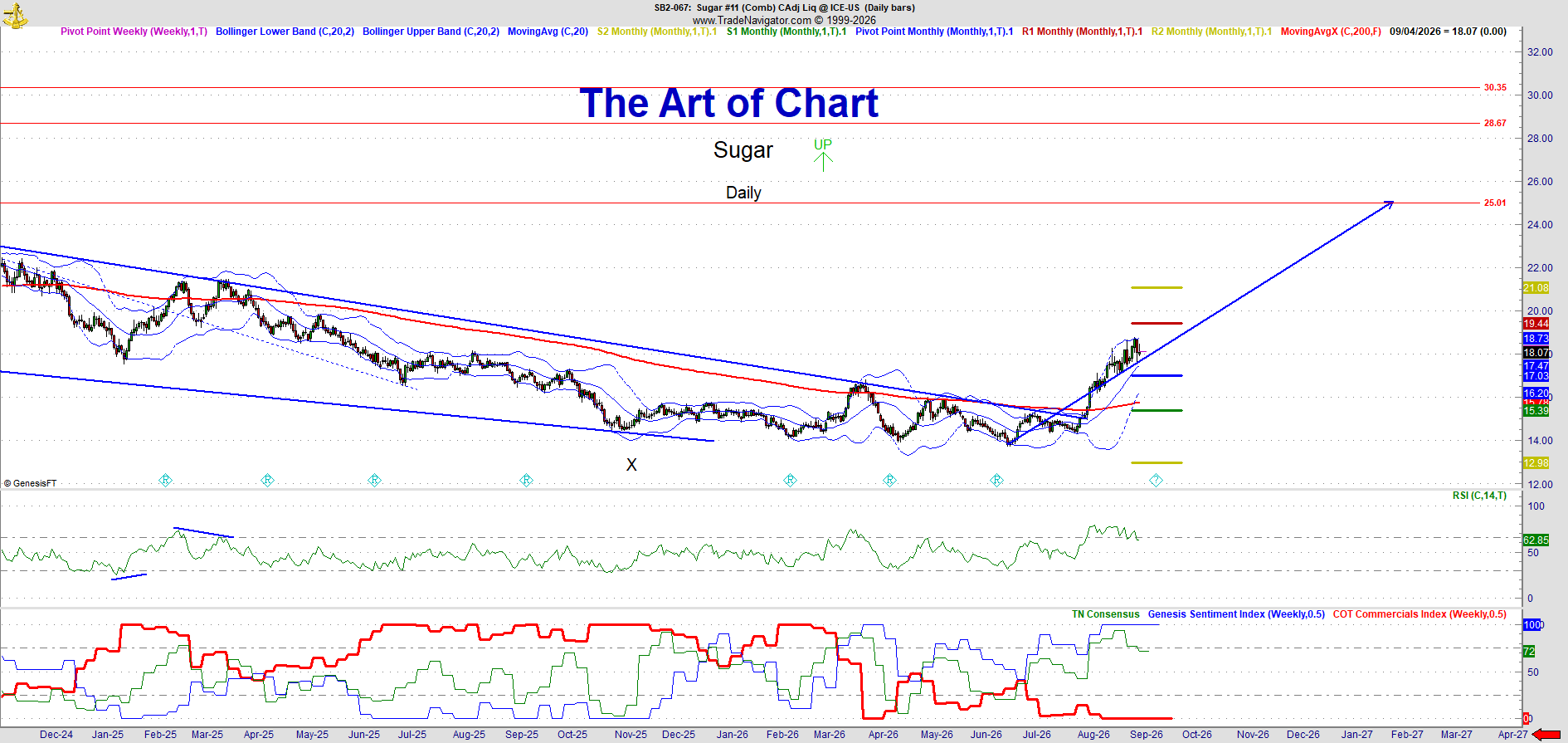
Sugar
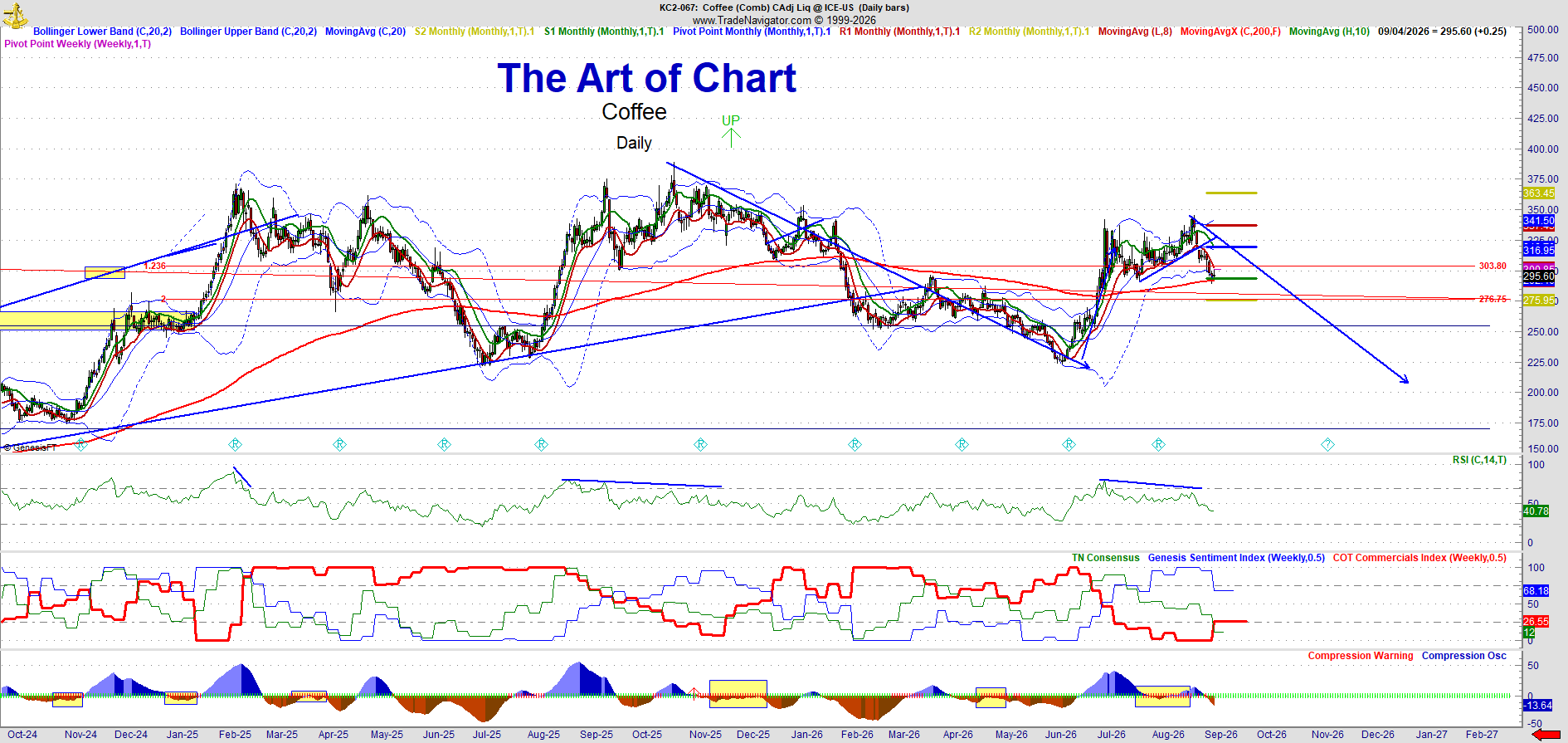
Coffee
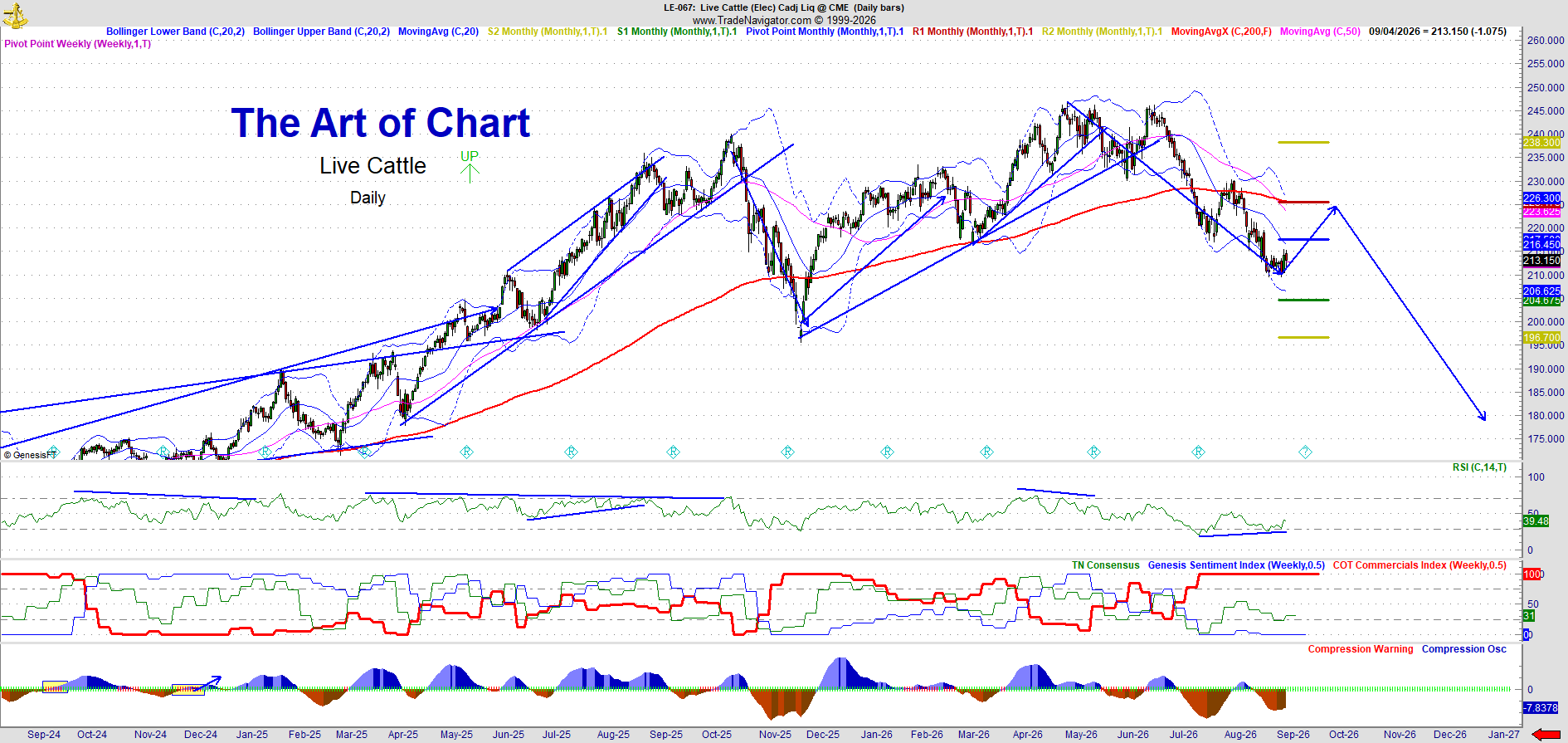
Live Cattle
Gold (GC)
Come see what we are trading – Try our 30 day FREE trial – Click Here
COMPLETED TRADES
Track Record of Completed Trades
The purpose of this blog is to demonstrate how to swing trade futures using our methodology to select high-quality setups and manage the trade with our risk management approach. This track record is based on entries and exits as posted in this blog. I am currently using 15 lots for the Striker trades which is based on this account being over $375,000. Each lot for auto trading at Striker requires $25,000 per lot. See the videos below for more information.
Track Record January 2022 thru December 2022 Click Here.
Track Record January 2021 thru December 2021 Click Here.
Track Record January 2020 thru December 2020 Click Here.
Track Record January 2019 thru December 2019 Click Here.
Track Record January 2018 thru December 2018 Click Here.
Track Record October 2016 – December 2017 Click Here.
*** Trading futures contracts and futures options involves substantial risk of loss, and may not be appropriate for all investors. By reading this web site, you acknowledge and accept that all trading decisions are your sole responsibility. Trading strategies referenced on this web site and associated documents and emails are only suggestions, no representation is being made that they will achieve profits or losses. Past performance is no guarantee of future results.. See our disclaimer here.
Completed trade in Cattle as of November 28th
We expect subscribers to have captured 60% of the swing in live cattle which is over $14,500 in profit using a margin of only $5,115. A great example of using leverage in futures.
Completed Trade in Coffee as of December 12th
The total swing was $37.00 and we expect subscribers to have captured 60% of a wing or $22 in coffee for a profit of over $25,500 using a margin of $8,850. A great example of using leverage in futures. See the video below for the review of the trade.
Completed Trade in Natural Gas as of January 2nd
We were stopped out of out last 1/3 position as weather-related news created a gap down on January 2nd and a possible flat with support at 3.196. This concludes our trade with natural gas; we exit with 550 ticks on 2/3s of a position with $8,500 in profit.
Completed Trade in Coffee as of January 19th
We exited the coffee trade on January 19th with $17 or over $15,000 in profit using a margin of $8,850. A great example of using leverage in futures.
Completed Trade in Gold as of February 8th
We exited the gold trade on February 8th with over $14,000 in profit. We entered on January 3rd and held the trade into the high window. We will re-enter gold in a few weeks after a backtest.
 06th Sep 2026