Welcome to this week’s edition of The Weekly Call, your trusted source for high-quality commodity setups and trading strategies. Since October 2016, our approach has delivered an impressive 777% return, and we continue to share the insights and methodologies that drive these results with this post #528. This week, we’ll explore the latest market trends, actionable trade setups, and global economic factors influencing commodities like sugar, coffee, live cattle, and gold.
U.S. Markets
S&P 500: Closed at 7,722.72, gaining approximately 0.7% Friday but declining approximately 0.3% for the week.
Nasdaq Composite: Closed at 27,190.86, gaining approximately 1.2% Friday and approximately 0.5% for the week.
Dow Jones Industrial Average: Closed at 51,176.96, gaining approximately 0.5% Friday but declining approximately 1.3% for the week.
U.S. equities finished the week on a strong note after significantly weaker-than-expected employment data reduced expectations for another Federal Reserve interest-rate increase in October.
The U.S. economy added only approximately 29,000 jobs in September, well below expectations near 90,000. The unemployment rate increased to approximately 4.2%, while previous employment numbers were also revised lower.
The probability of another Federal Reserve rate increase at the October meeting dropped sharply following the report.
Technology stocks responded positively, with the Nasdaq outperforming Friday and completing its fifth positive week in the past six.
Tesla gained approximately 4.7% Friday, while Nvidia and other large technology companies also strengthened.
Small-cap stocks benefited from the lower rate expectations, with the Russell 2000 gaining approximately 0.9% Friday.
The biggest macroeconomic concern remains the bond market.
The 10-year Treasury yield reached approximately 5.34% during the week, its highest level in roughly 24 years.
Despite historically high interest rates, the S&P 500 remains approximately 1% below its record high and is still up roughly 13% for 2026.
Artificial intelligence continues providing significant support for equity markets, but increasingly high financing costs are creating a major counterweight.
Global Markets
FTSE 100 (United Kingdom): Closed at 10,461.95, gaining approximately 0.3% Friday but declining approximately 2.2% for the week.
DAX (Germany): Closed at 25,231.20, gaining approximately 1.2% Friday but declining approximately 0.7% for the week.
Nikkei 225 (Japan): Finished the week near 68,300, gaining approximately 3% for the week.
Shanghai Composite (China): Latest close approximately 3,842, with Chinese markets entering the national holiday period.
Global markets remained volatile as investors reacted to rapidly rising government bond yields.
European equities were pressured by concerns surrounding government debt, inflation, and borrowing costs.
France remains particularly important.
The yield spread between French and German government debt widened substantially as investors became increasingly concerned about France’s fiscal position and future borrowing requirements.
European governments are facing the same fundamental challenge as the United States: financing large fiscal deficits while interest rates remain historically high.
Japan continued outperforming most developed markets.
Japanese technology and semiconductor companies continue benefiting from artificial-intelligence investment, while a weaker yen remains supportive for many exporters.
China remains more complicated.
Government stimulus continues supporting portions of the economy, but property weakness, consumer demand, and external trade remain significant concerns.
The larger global trend is unmistakable.
The era of extremely inexpensive government borrowing appears to be over, at least for now.
Commodities Snapshot
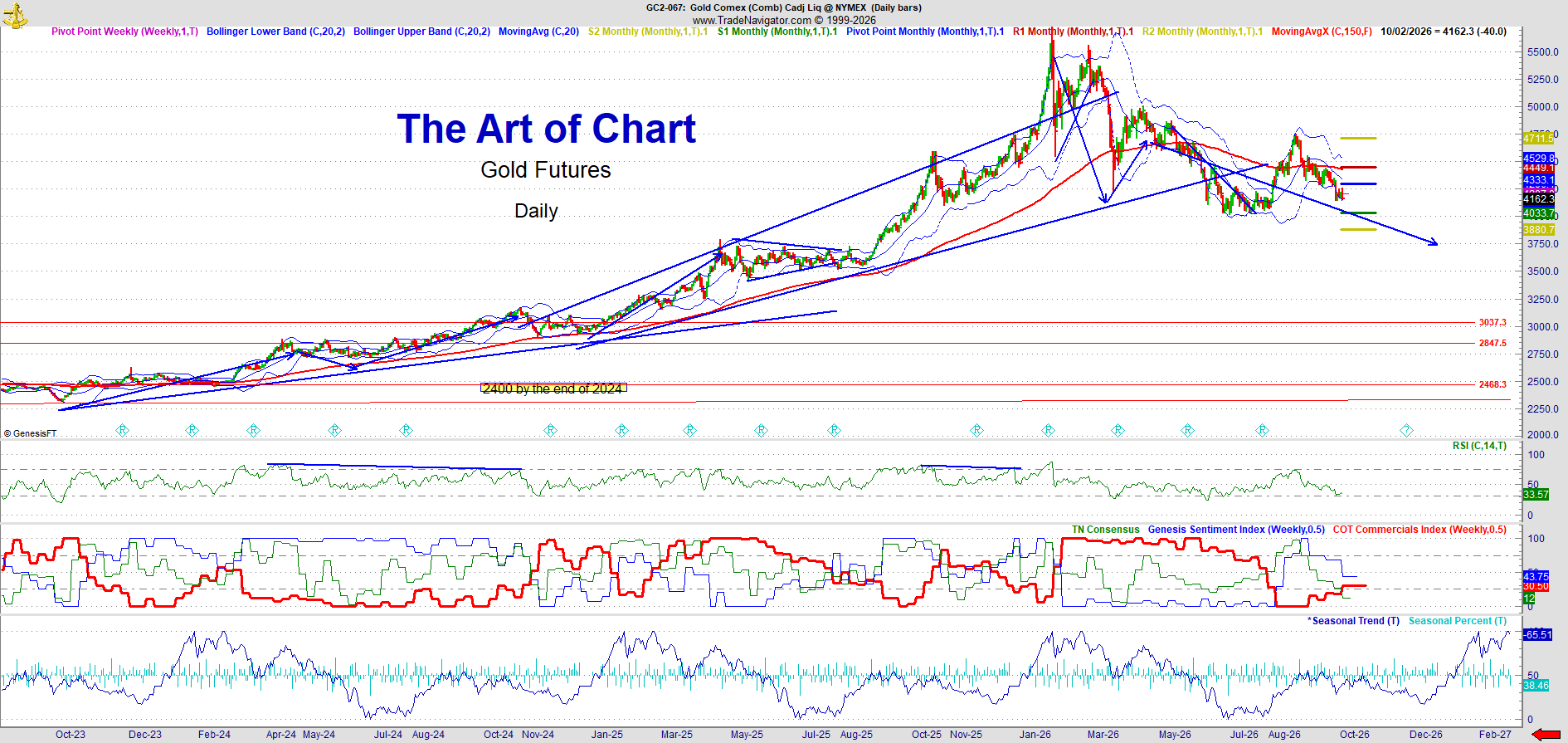
Gold: Approximately $4,140–$4,160/oz, declining approximately 3.5% for the week.
Silver: Approximately $60/oz, declining roughly 6%–7% for the week.
Copper: Approximately $6.45–$6.50/lb, remaining historically elevated.
WTI Crude Oil: Approximately $91/barrel.
Brent Crude Oil: Approximately $102/barrel.
Natural Gas: Approximately $3.04/MMBtu.
Gold experienced another difficult week.
The primary problem remains exceptionally high real interest rates.
When investors can earn more than 5% in long-term government securities, the opportunity cost associated with holding a non-yielding asset such as gold becomes considerably higher.
Silver also declined sharply.
Copper continues to behave differently.
The long-term copper story remains supported by constrained mine supply and rapidly increasing demand from power transmission, AI data centers, electrification, manufacturing, and grid modernization.
Oil remains one of the largest macroeconomic risks.
WTI continues trading near $90 while Brent remains above $100.
The G7 has discussed releasing crude oil and diesel from emergency reserves to reduce energy-market pressure.
The United States also indicated that it does not currently plan to ban diesel exports.
Those developments helped reduce some of the immediate pressure on energy markets.
However, the Middle East remains extremely unstable.
Any disruption involving major shipping routes or regional oil production could quickly push energy prices higher again.
Cryptocurrency Market
Bitcoin (BTC): Approximately $84,700–$84,800, consolidating after briefly trading above $87,000 during the week.
Ethereum (ETH): Approximately $2,680, remaining near $2,700 after a strong third quarter.
Solana (SOL): Approximately $119, consolidating after its recent institutional-driven advance.
XRP: Approximately $1.49, holding near the psychologically important $1.50 level.
BNB: Approximately $785–$790, approaching the $800 level.
Cardano (ADA): Approximately $0.245, participating modestly in the broader altcoin recovery.
Dogecoin (DOGE): Approximately $0.093, remaining below $0.10.
Hyperliquid (HYPE): Approximately $89, remaining one of the strongest decentralized-derivatives assets.
Bitcoin remains remarkably resilient considering what has occurred in global bond markets.
BTC briefly traded above $87,000 following the weaker employment report before giving back part of the move.
The important development is that Bitcoin remains comfortably above $80,000 even with the 10-year Treasury yield above 5%.
Institutional participation continues providing structural support.
Bitcoin remains the primary institutional cryptocurrency asset, but regulated exposure continues expanding into Ethereum, Solana, XRP, decentralized finance, stablecoins, and tokenized financial assets.
Bitcoin finished the third quarter with its strongest quarterly performance since 2024.
Ethereum completed its strongest quarter since 2021.
The crypto market continues transitioning from primarily speculative trading toward a broader institutional financial infrastructure.
Key Market Drivers
- September payroll growth was dramatically weaker than expected. The U.S. economy added only approximately 29,000 jobs, versus expectations around 90,000.
- The unemployment rate increased to approximately 4.2%. The labor market is showing clearer signs of slowing.
- Federal Reserve expectations changed substantially. The market-implied probability of an October rate increase fell from more than 60% the previous week to roughly 20%–25% after Friday’s employment report.
- The 10-year Treasury yield reached approximately 5.34%. This was the highest level in roughly 24 years and remains one of the most important numbers across global financial markets.
- The 30-year Treasury yield also moved sharply higher. Long-term government financing costs remain a significant economic risk.
- Inflation data was somewhat better than expected. Softer inflation helped reduce immediate pressure on the Federal Reserve to raise rates again in October.
- Artificial intelligence spending remains enormous. Semiconductor, memory, networking, cloud, power, cooling, and data-center companies continue benefiting from historically large infrastructure investment.
- AI remains the primary support beneath technology valuations. Investors will closely examine third-quarter earnings for evidence that hyperscale capital spending remains strong.
- Corporate earnings remain strong. U.S. corporate profit growth continues helping equities absorb historically high interest rates.
- Oil remains above historically comfortable levels. Brent continues trading above $100, keeping inflation risk elevated.
- Gold and silver declined sharply. High real interest rates continue creating pressure on precious metals.
- European bond markets became increasingly unstable. France’s fiscal outlook and rising government borrowing costs remain significant concerns.
- The fourth quarter began with equities near record levels. Historically, the fourth quarter has been seasonally favorable, although high bond yields make this year considerably different.
- Bitcoin remained above $80,000 despite the bond selloff. That resilience continues demonstrating stronger institutional support than existed during previous crypto cycles.
The strongest market tension remains the conflict between slowing economic growth and persistent inflation.
If inflation continues declining while employment gradually weakens, the Federal Reserve can potentially stop raising rates.
If energy prices push inflation higher while employment continues weakening, markets could face a considerably more difficult stagflationary environment.
Emerging Crypto Projects & Ecosystem News
- DogeOS launched a public testnet. The project allows developers to build Ethereum-compatible applications around Dogecoin.
- DogeOS is attempting to expand DOGE beyond payments and speculation. Potential applications include decentralized exchanges, lending, borrowing, stablecoins, and other decentralized-finance products.
- DogeOS eventually wants Dogecoin miners involved in network security. A proposed Dogecoin Core upgrade could allow miners to verify proofs generated by DogeOS applications.
- USDT is returning to the Bitcoin ecosystem through Utexo. The Tether-backed project plans to bring stablecoin functionality directly into the Bitcoin financial ecosystem.
- Utexo plans private USDT transfers. The project is designed to keep much of the transaction information away from Bitcoin’s public ledger.
- Direct BTC-USDT swaps are planned. This could make Bitcoin significantly easier to use within financial applications.
- Bitcoin-backed lending is also planned through Utexo. This represents another important expansion of BTCFi, or Bitcoin Finance.
- Blast announced that it is shutting down. The Ethereum Layer-2 network once held more than $2 billion in assets but has experienced approximately a 98% decline from peak levels.
- Blast’s failure highlights Layer-2 consolidation. The crypto industry likely created more Ethereum Layer-2 networks than sustainable long-term demand can support.
- The SEC proposed new cryptocurrency custody rules. The proposal would create a clearer framework for investment advisers and regulated investment funds holding crypto assets.
- Institutional crypto custody continues becoming easier. Regulatory clarity remains one of the largest requirements for pension funds, registered advisers, asset managers, and other institutional investors.
- Ethereum’s Glamsterdam upgrade reaches another major test on October 6. The Sepolia test network is scheduled to activate the upgrade as Ethereum continues working toward greater Layer-1 capacity and scalability.
- Glamsterdam introduces significant changes to Ethereum block production. The upgrade is designed to improve throughput and create a more efficient network architecture.
- Solana’s Alpenglow upgrade continues advancing. The new consensus architecture targets transaction finality of approximately 150 milliseconds, compared with roughly 12.8 seconds previously.
- Stablecoins continue expanding throughout global financial markets. Payments, treasury management, settlement, cross-border transactions, and institutional liquidity remain among blockchain’s strongest applications.
- Tokenized Treasury securities continue growing. Blockchain-based government securities and money-market products remain among the clearest institutional digital-asset use cases.
- Tokenized stocks continue developing. Traditional exchanges, fintech companies, and blockchain platforms are increasingly building infrastructure for onchain equity ownership and settlement.
- Real-world asset tokenization remains a major structural theme. Bonds, stocks, private credit, commodities, money-market funds, and other financial assets continue moving onto blockchain infrastructure.
- Hyperliquid remains an important decentralized-finance platform. Decentralized perpetual futures continue attracting significant trading volume and institutional attention.
- Traditional banks are pushing back against crypto banking expansion. Community banks have challenged federal regulators over national trust charters granted to cryptocurrency companies.
- Binance remains under regulatory scrutiny in Europe. European regulators continue examining the exchange’s operations following implementation of MiCA licensing requirements.
The strongest emerging crypto themes remain Bitcoin Finance, institutional custody, stablecoins, tokenized securities, real-world assets, decentralized derivatives, interoperability, and blockchain-based financial settlement.
Outlook for the Week Ahead
- Federal Reserve minutes: Investors will review the September meeting minutes for additional information regarding future interest-rate increases.
- Treasury yields: The 10-year yield remains the most important macroeconomic number to watch.
- Inflation: Additional evidence that inflation is easing would substantially strengthen the case for an October Fed pause.
- Employment: The weak September payroll report has shifted the monetary-policy debate toward whether the labor market is beginning to deteriorate.
- Third-quarter earnings: Earnings season begins becoming increasingly important.
- Artificial intelligence: Hyperscale capital expenditures remain central to the market’s technology-growth thesis.
- Data centers: Power, cooling, electrical equipment, semiconductors, networking, and memory remain major beneficiaries of AI infrastructure spending.
- Oil: Middle East developments remain capable of moving crude dramatically in either direction.
- France and European debt: Government fiscal concerns and bond-market instability remain important global risks.
- Japan: Higher inflation and rising Japanese bond yields could eventually create additional pressure on global capital flows.
- U.S.-China relations: Tariffs, artificial intelligence, semiconductors, critical minerals, agriculture, and trade remain important market catalysts.
- Bitcoin: The $82,000–$83,000 area remains the most important short-term support zone.
- Ethereum: The October 6 Glamsterdam Sepolia activation will be worth monitoring.
- Solana: Alpenglow remains one of the more important major blockchain technology upgrades.
- Stablecoins: Utexo and continued institutional stablecoin adoption demonstrate how rapidly stablecoins are becoming part of mainstream financial infrastructure.
- Tokenization: Traditional securities moving onto blockchain infrastructure remains one of the strongest long-term digital-asset themes.
Key Levels to Watch
S&P 500: Support 7,600–7,650 | Resistance 7,800–7,850
Nasdaq Composite: Support 26,800–27,000 | Resistance 27,500
10-Year Treasury: Support 5.00% | Current Area approximately 5.3% | Major Risk Level 5.50%
Bitcoin: Support $82,000–$83,000 | Major Support $78,000–$80,000 | Resistance $86,000–$87,500 | Major Breakout $90,000
Ethereum: Support $2,600–$2,625 | Resistance $2,775–$2,800 | Major Breakout $3,000
Solana: Support $115–$117 | Resistance $125–$130 | Major Breakout $135
Gold: Support $4,000–$4,100 | Resistance $4,250–$4,300
Silver: Support $58–$60 | Resistance $63–$65
Copper: Support $6.30–$6.40 | Resistance $6.60–$6.75
WTI Crude Oil: Support $88–$90 | Resistance $95 | Major Resistance $100
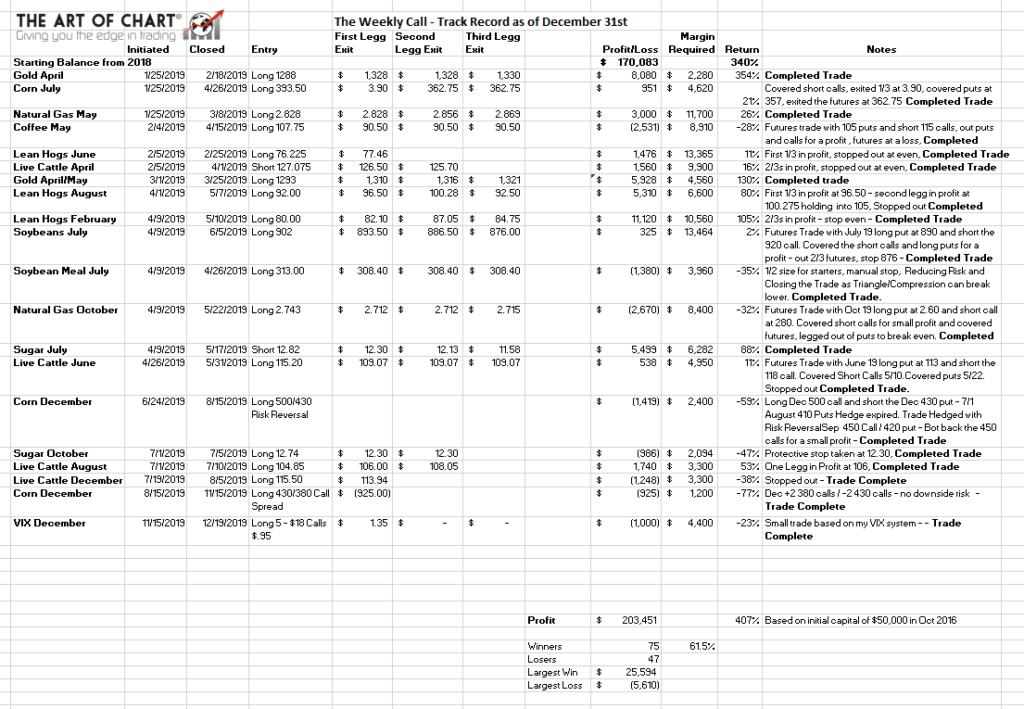
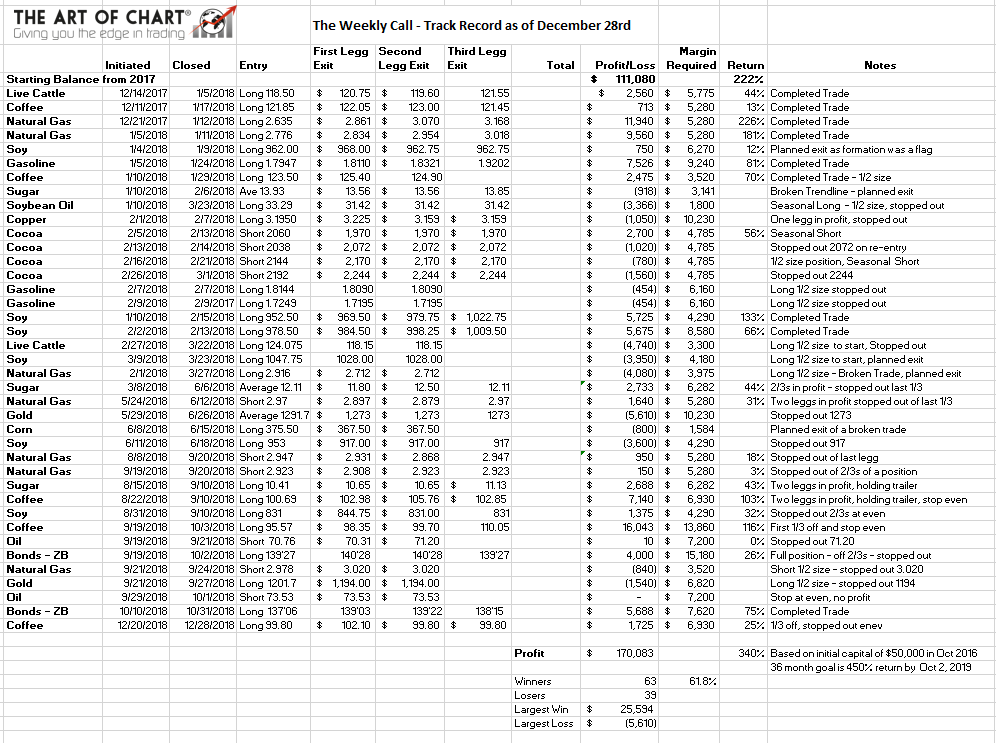
As always, stay informed and adjust your strategies based on the evolving market conditions. All trades are posted on our Private Twitter Feed for subscribers and are included in the track record posted below under Completed Trades. I am currently trading 15 lots given the account balance and will adjust as necessary based on market developments.
Trading futures contracts and commodity options involves substantial risk of loss, and may not be appropriate for all investors. Past performance is no guarantee of future results. Please see our Disclaimer for more information.
The trades below are discussed on the Daily Update: – Click Here for a FREE Trial
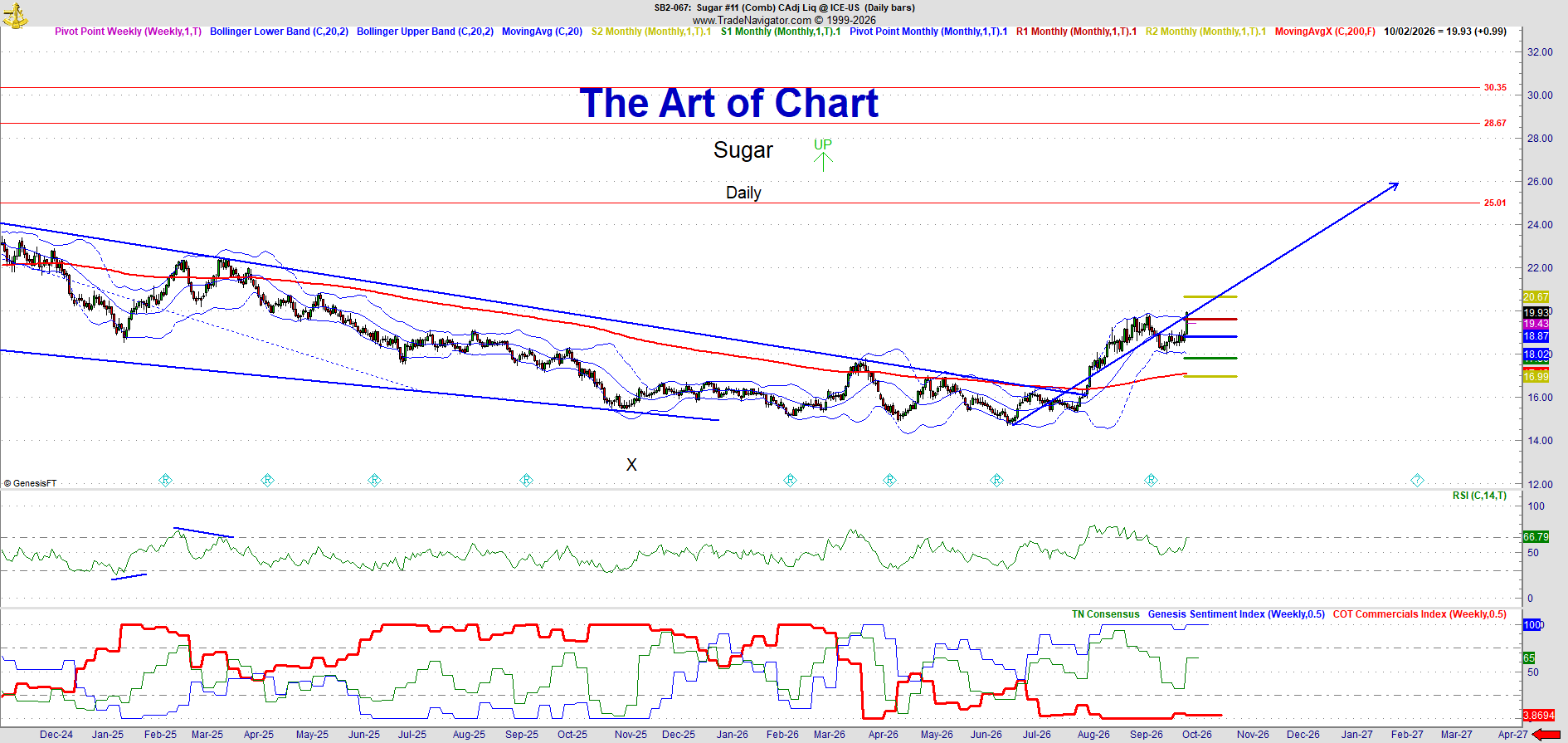
Sugar
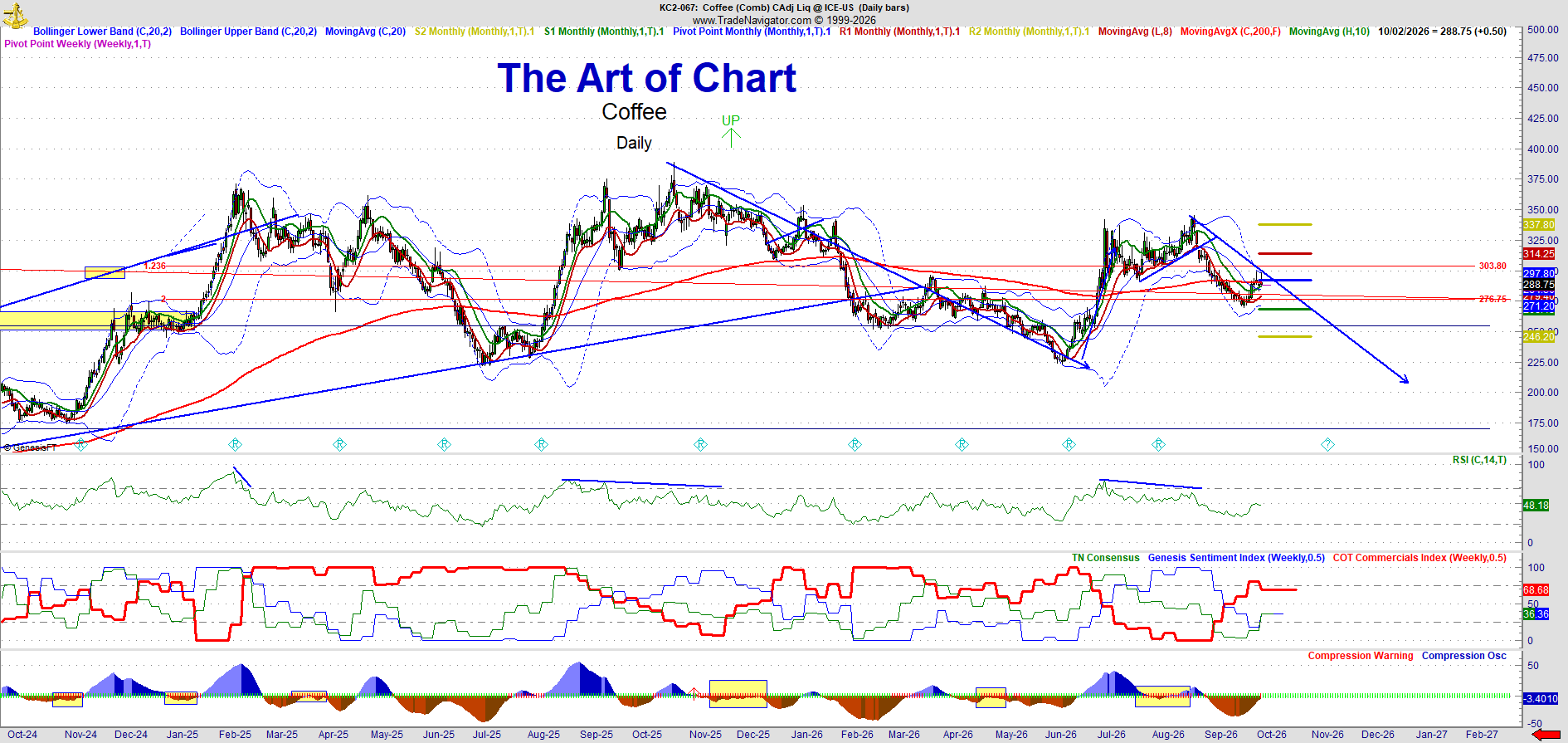
Coffee
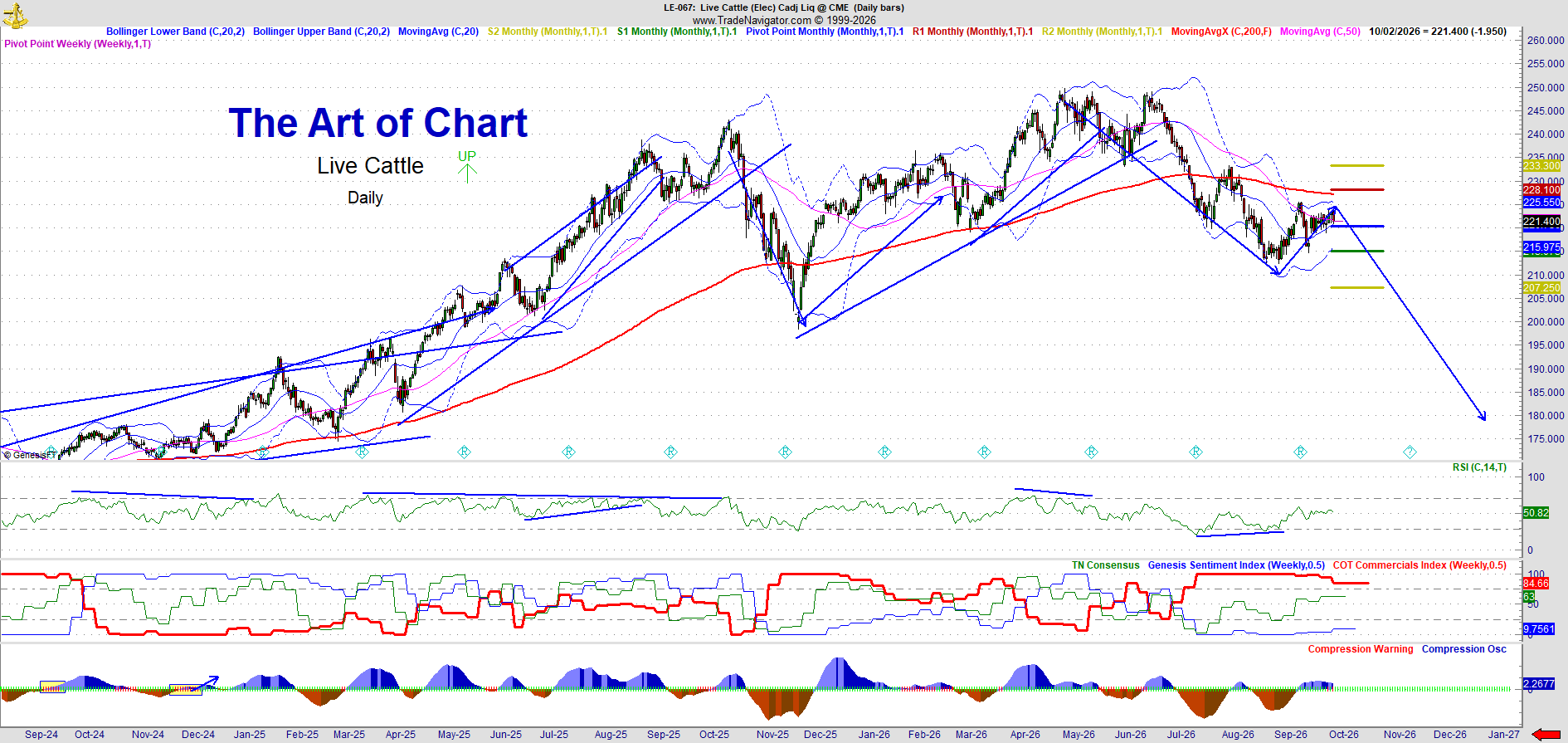
Live Cattle
Gold (GC)
Come see what we are trading – Try our 30 day FREE trial – Click Here
COMPLETED TRADES
Track Record of Completed Trades
The purpose of this blog is to demonstrate how to swing trade futures using our methodology to select high-quality setups and manage the trade with our risk management approach. This track record is based on entries and exits as posted in this blog. I am currently using 15 lots for the Striker trades which is based on this account being over $375,000. Each lot for auto trading at Striker requires $25,000 per lot. See the videos below for more information.
Track Record January 2022 thru December 2022 Click Here.
Track Record January 2021 thru December 2021 Click Here.
Track Record January 2020 thru December 2020 Click Here.
Track Record January 2019 thru December 2019 Click Here.
Track Record January 2018 thru December 2018 Click Here.
Track Record October 2016 – December 2017 Click Here.
*** Trading futures contracts and futures options involves substantial risk of loss, and may not be appropriate for all investors. By reading this web site, you acknowledge and accept that all trading decisions are your sole responsibility. Trading strategies referenced on this web site and associated documents and emails are only suggestions, no representation is being made that they will achieve profits or losses. Past performance is no guarantee of future results.. See our disclaimer here.
Completed trade in Cattle as of November 28th
We expect subscribers to have captured 60% of the swing in live cattle which is over $14,500 in profit using a margin of only $5,115. A great example of using leverage in futures.
Completed Trade in Coffee as of December 12th
The total swing was $37.00 and we expect subscribers to have captured 60% of a wing or $22 in coffee for a profit of over $25,500 using a margin of $8,850. A great example of using leverage in futures. See the video below for the review of the trade.
Completed Trade in Natural Gas as of January 2nd
We were stopped out of out last 1/3 position as weather-related news created a gap down on January 2nd and a possible flat with support at 3.196. This concludes our trade with natural gas; we exit with 550 ticks on 2/3s of a position with $8,500 in profit.
Completed Trade in Coffee as of January 19th
We exited the coffee trade on January 19th with $17 or over $15,000 in profit using a margin of $8,850. A great example of using leverage in futures.
Completed Trade in Gold as of February 8th
We exited the gold trade on February 8th with over $14,000 in profit. We entered on January 3rd and held the trade into the high window. We will re-enter gold in a few weeks after a backtest.
 03rd Oct 2026