Welcome to this week’s edition of The Weekly Call, your trusted source for high-quality commodity setups and trading strategies. Since October 2016, our approach has delivered an impressive 777% return, and we continue to share the insights and methodologies that drive these results with this post #530. This week, we’ll explore the latest market trends, actionable trade setups, and global economic factors influencing commodities like sugar, coffee, live cattle, and gold.
Financial markets experienced a significant shift this week as investors reduced exposure to technology and artificial intelligence stocks while rotating into defensive sectors.
The Nasdaq declined nearly 4.5%, semiconductor stocks fell more than 11%, and concerns about debt-financed AI infrastructure projects intensified. Meanwhile, the Dow finished modestly higher, suggesting investors are becoming more selective rather than abandoning equities.
Inflation also returned to the forefront. Consumer prices rose 3.7% annually, producer prices increased 6.3%, and WTI crude climbed above $100 per barrel.
The key question is whether this correction represents a temporary valuation adjustment or the beginning of a broader market decline. Upcoming corporate earnings should provide greater clarity.
U.S. Markets
S&P 500: 7,659.44 — down 1.95% for the week
The S&P 500 recorded its weakest week since June as investors reassessed technology valuations and earnings expectations. Defensive sectors held up better, while growth-sensitive companies experienced substantial selling. I am watching 7,600 as near-term support and 7,800 as an important recovery level.
Nasdaq Composite: 26,140.03 — down 4.48%
Technology shares led the decline, with the Philadelphia Semiconductor Index losing approximately 11.4%. CoreWeave fell roughly 25% amid growing concerns over AI infrastructure financing.
Investors are increasingly distinguishing between companies generating substantial AI revenue and those dependent on continued borrowing and future growth. Next week’s technology earnings will be particularly important.
Dow Jones Industrial Average: 52,002.41 — up 0.67%
The Dow outperformed as investors rotated into established businesses, energy, consumer staples, and defensive industries. This relative strength suggests sector rotation rather than a complete withdrawal from equities.
Russell 2000: 2,721.37 — down 3.05%
Small-cap stocks weakened as elevated borrowing costs and economic uncertainty continued to pressure smaller businesses.
10-Year Treasury Yield: approximately 5.10%
Treasury yields declined despite higher inflation, reflecting increased demand for safer assets.
VIX: 19.99
Market volatility increased sharply from last week’s 14.84, indicating greater concern about equity valuations and the economic outlook.
Global Markets
FTSE 100: 10,881.90 — up approximately 3.1%
British equities recorded their strongest week in approximately six months, supported by defensive sectors.
DAX: 25,622.61
German equities advanced despite persistent concerns about energy costs and industrial competitiveness.
Nikkei 225: 65,324.29
Japanese equities remained volatile amid technology-sector weakness and currency uncertainty.
Shanghai Composite: 3,716.28
Chinese equities weakened as investors assessed domestic growth and industrial demand.
International markets remain mixed, reinforcing the importance of diversification and avoiding excessive concentration in U.S. technology stocks.
Commodities Snapshot
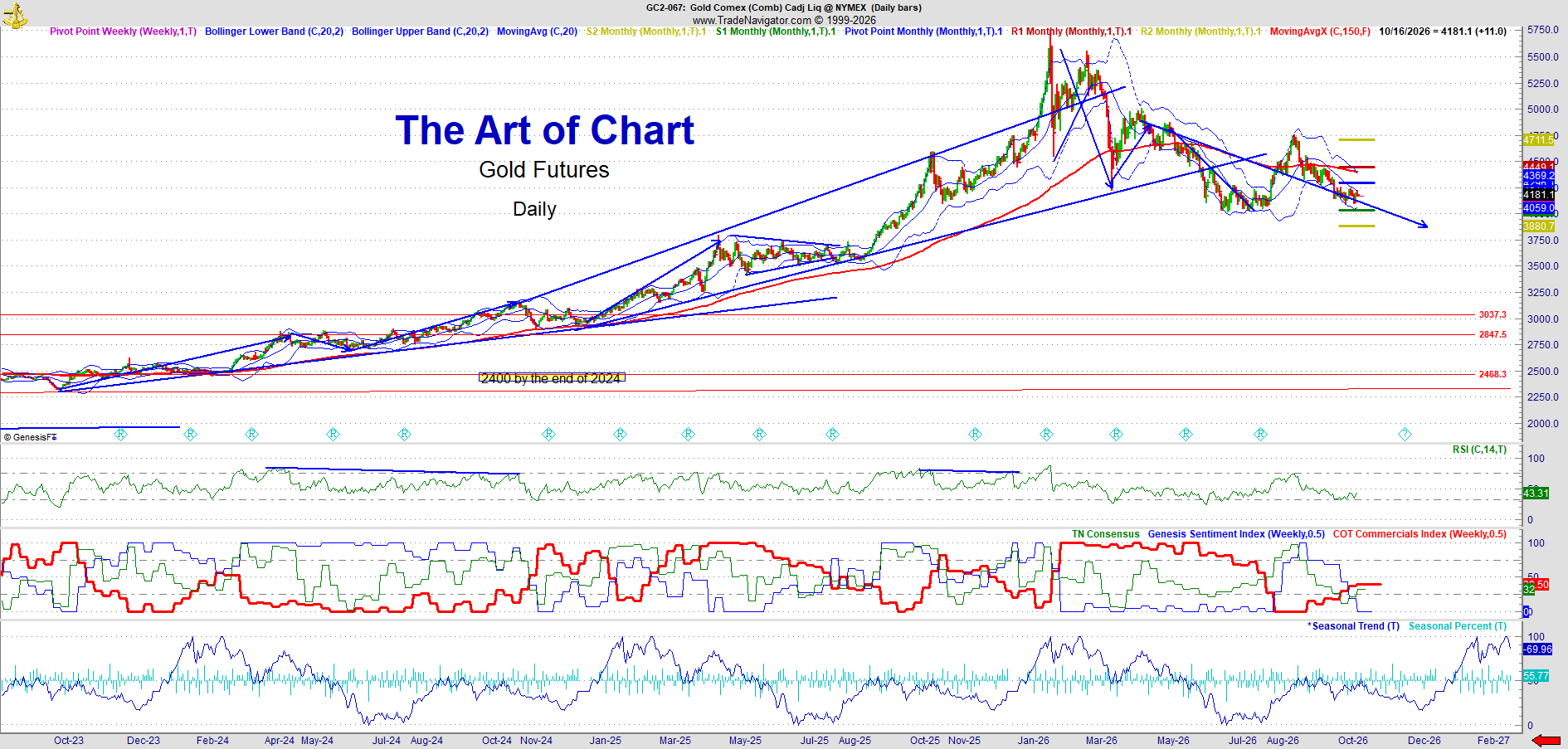
Gold: $4,181.10 per ounce — December futures
Gold declined approximately 0.8% for the week. Inflation concerns and interest-rate expectations remain important influences, although defensive investment demand may provide support.
Silver: $57.135 per ounce — December futures
Silver fell approximately 6.4%, reflecting weakness in precious metals and concerns about industrial demand.
Copper: $6.562 per pound — December futures
Copper declined approximately 1.9%. Longer term, electrical infrastructure, grid expansion, and AI data centers remain important demand drivers.
WTI Crude Oil: $101.41 per barrel — November futures
Brent Crude Oil: $109.86 per barrel — December futures
Oil prices increased sharply as geopolitical risks and supply disruptions intensified. The return of WTI above $100 raises concerns about inflation, transportation costs, and corporate margins.
Natural Gas: $3.117 per MMBtu — November futures
Natural gas declined approximately 3.2%. Weather, storage levels, production, and LNG demand remain the primary drivers.
Cryptocurrency Market
Cryptocurrency markets remained under pressure, although Bitcoin demonstrated greater relative strength than most major altcoins.
| Cryptocurrency | Price | Change Since Oct. 11 |
|---|---|---|
| Bitcoin (BTC) | $81,475 | -1.9% |
| Ethereum (ETH) | $2,433 | -2.8% |
| Solana (SOL) | $104.55 | -4.6% |
| XRP | $1.31 | -5.8% |
| BNB | $720.28 | -3.8% |
| Cardano (ADA) | $0.2229 | -9.9% |
| Dogecoin (DOGE) | $0.0803 | -5.8% |
| Hyperliquid (HYPE) | $79.80 | -6.4% |
Bitcoin held near $81,500 despite institutional ETF outflows and weaker demand for speculative investments.
Meanwhile, traditional financial institutions continue expanding digital asset services, including custody, stablecoin payments, and tokenized securities.
My preference remains Bitcoin as the core cryptocurrency position, with selective exposure to Ethereum and Solana after broader market conditions stabilize.
Key Market Drivers
1. AI investment faces increasing scrutiny
AI infrastructure remains one of the largest investment opportunities in decades, but investors are questioning the returns on enormous capital commitments.
Companies with strong balance sheets, customer orders, and recurring revenue are increasingly favored over highly leveraged infrastructure developers. I continue to prefer established suppliers of electrical equipment, cooling, power generation, and networking infrastructure.
2. Inflation exceeded expectations
September CPI increased 0.6% for the month and 3.7% annually. Producer prices rose 1.3% monthly and 6.3% annually.
These figures reinforce concerns that inflation may remain elevated, potentially requiring the Federal Reserve to maintain restrictive monetary policy.
3. Oil prices returned above $100
WTI reached $101.41, while Brent approached $110. Supply disruptions and geopolitical uncertainty remain significant risks.
Higher energy costs could further increase inflation and pressure consumer spending and corporate profitability.
4. Consumer spending remains resilient but uneven
September retail sales increased 0.8%, exceeding expectations. However, excluding gasoline, sales rose only 0.2%.
Consumers continue spending, but higher prices are absorbing a larger portion of household budgets.
5. Investors rotated into defensive sectors
The Dow advanced while the Nasdaq experienced a substantial decline. Energy, consumer staples, and other established businesses attracted investor interest.
This rotation may continue if interest rates remain elevated and investors prioritize earnings quality.
6. Federal Reserve policy remains uncertain
The federal funds target range stands at 3.75%–4.00%. With inflation accelerating, further tightening remains possible.
The October 27–28 Fed meeting will be closely watched for guidance on future policy.
7. Corporate earnings become the next major test
More than 70 S&P 500 companies are expected to report during the coming week.
Meta, Tesla, IBM, Texas Instruments, and Lam Research will provide important information about AI investment, industrial demand, and profitability. Strong results could help stabilize technology stocks.
Emerging Crypto Projects & Ecosystem News
Deutsche Bank expands into cryptocurrency custody
Deutsche Bank is preparing digital asset custody services, initially focusing on Bitcoin and Ethereum, with potential expansion into stablecoins and tokenized securities.
Charles Schwab broadens direct cryptocurrency trading
Eligible Schwab customers can access direct Bitcoin and Ethereum trading, expanding mainstream brokerage participation in digital assets.
Circle expands stablecoin infrastructure
Circle plans to enter approximately 40 additional markets, emphasizing digital-dollar payments and international settlement.
Kraken moves toward integrated banking
Kraken’s parent company is pursuing a European bank acquisition, bringing cryptocurrency services closer to traditional banking infrastructure.
Tokenized equities encounter resistance
Several public companies have objected to plans for tokenized trading of their shares on OKXICE, highlighting the importance of regulation, shareholder protections, and market transparency.
These developments reinforce my view that institutional blockchain adoption continues despite short-term weakness in cryptocurrency prices.
Outlook for the Week Ahead
The week of October 19–23 will be dominated by corporate earnings and several important economic releases.
Monday, October 19
October NAHB Housing Market Index will provide insight into homebuilder confidence and housing demand.
Tuesday, October 20
September housing starts and building permits are scheduled for 8:30 a.m. Eastern.
Earnings include GE Aerospace, General Motors, RTX, Netflix, and United Airlines.
Wednesday, October 21
An important day for technology earnings, including Meta Platforms, Tesla, IBM, Texas Instruments, and Lam Research.
I will be watching AI capital spending, customer demand, margins, and management guidance.
Thursday, October 22
Weekly initial unemployment claims are scheduled for 8:30 a.m. Eastern.
Earnings include Procter & Gamble, Lockheed Martin, Comcast, and Blackstone.
Friday, October 23
Preliminary October manufacturing and services PMI reports will provide an updated assessment of business activity and inflation pressure.
The University of Michigan’s final October consumer sentiment report will also be released.
What I am watching: Strong earnings and continued AI investment could stabilize technology shares. However, weaker guidance, elevated financing costs, or renewed semiconductor selling could extend the correction.
Oil prices, Treasury yields, and Bitcoin will remain important indicators of broader market sentiment.
Key Levels to Watch
| Market | Current Level | Upside Reference | Downside Reference |
|---|---|---|---|
| S&P 500 | 7,659.44 | 7,725 / 7,800 | 7,600 / 7,500 |
| Nasdaq Composite | 26,140.03 | 26,500 / 27,000 | 26,000 / 25,500 |
| Dow Jones | 52,002.41 | 52,500 / 53,000 | 51,500 / 51,000 |
| Gold | $4,181.10 | $4,200 / $4,250 | $4,150 / $4,100 |
| Silver | $57.135 | $59 / $60 | $56 / $55 |
| WTI Crude | $101.41 | $105 / $110 | $100 / $95 |
| Bitcoin | $81,475 | $84,000 / $85,000 | $80,000 / $78,000 |
| Ethereum | $2,433 | $2,500 / $2,600 | $2,400 / $2,300 |
| Solana | $104.55 | $110 / $120 | $100 / $95 |
These are price-monitoring reference levels, not guaranteed support or resistance.
As always, stay informed and adjust your strategies based on the evolving market conditions. All trades are posted on our Private Twitter Feed for subscribers and are included in the track record posted below under Completed Trades. I am currently trading 15 lots given the account balance and will adjust as necessary based on market developments.
Trading futures contracts and commodity options involves substantial risk of loss, and may not be appropriate for all investors. Past performance is no guarantee of future results. Please see our Disclaimer for more information.
The trades below are discussed on the Daily Update: – Click Here for a FREE Trial
Sugar
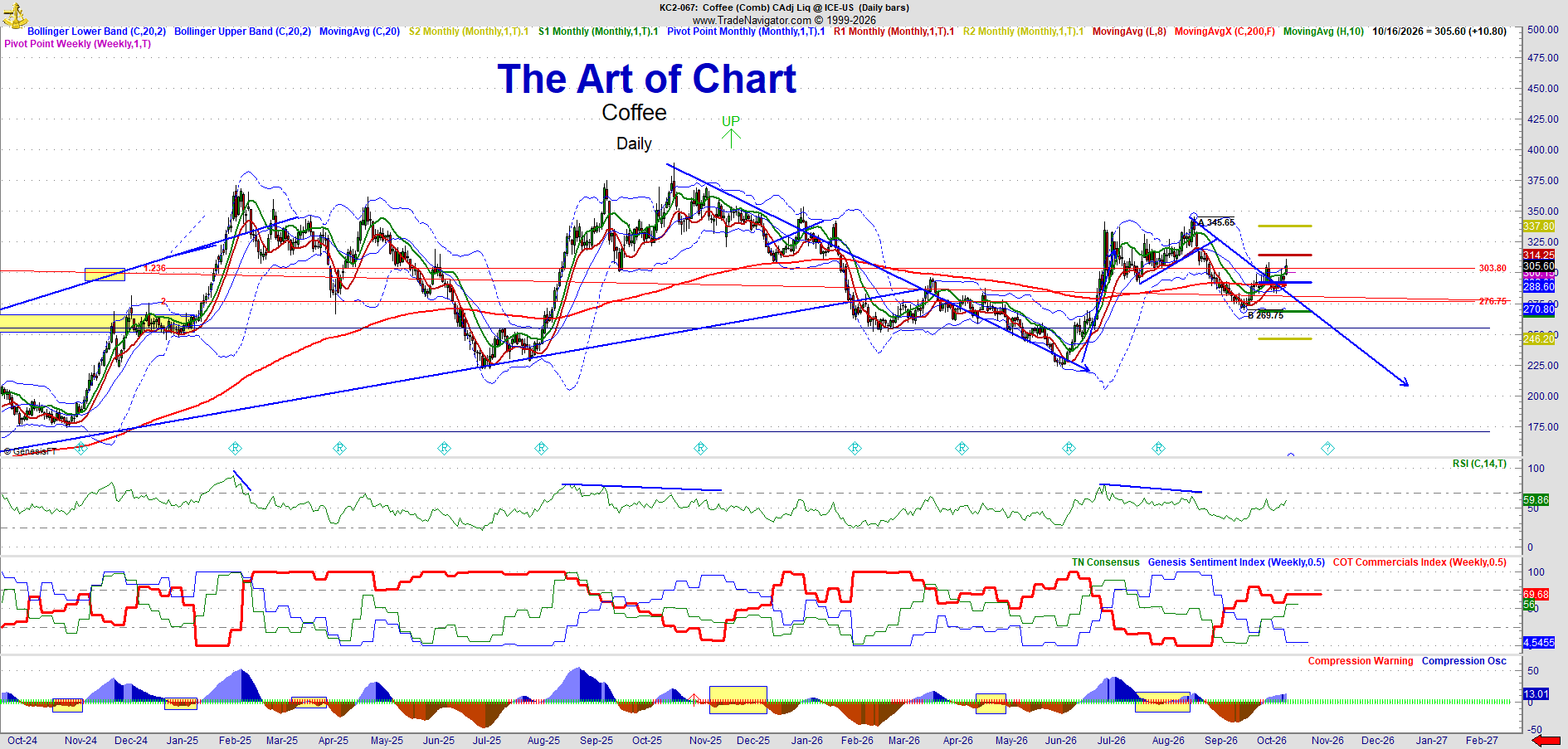
Coffee
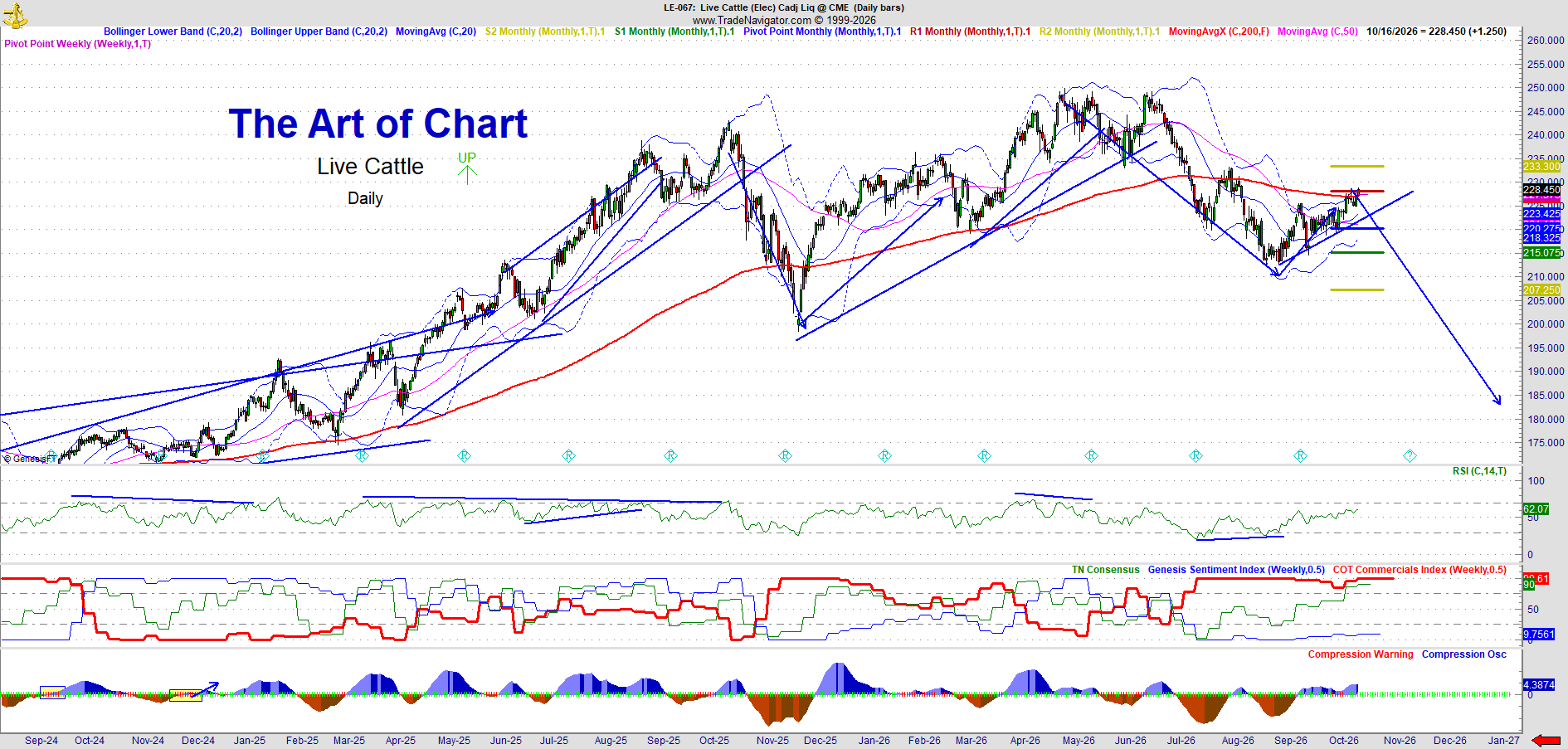
Live Cattle
Gold (GC)
Come see what we are trading – Try our 30 day FREE trial – Click Here
COMPLETED TRADES
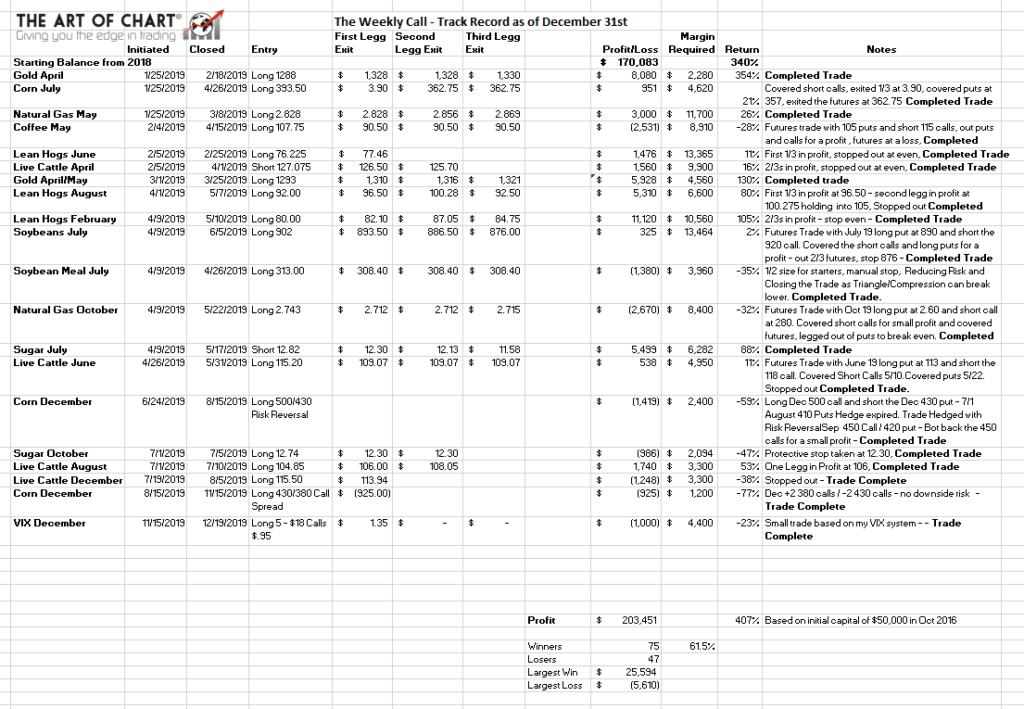
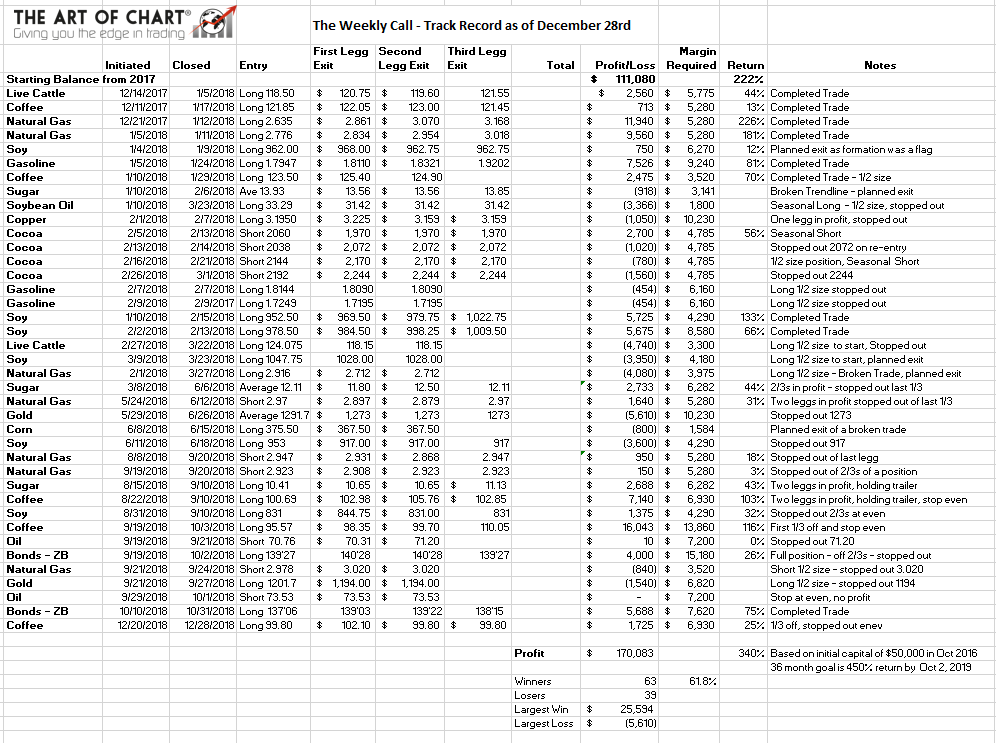
Track Record of Completed Trades
The purpose of this blog is to demonstrate how to swing trade futures using our methodology to select high-quality setups and manage the trade with our risk management approach. This track record is based on entries and exits as posted in this blog. I am currently using 15 lots for the Striker trades which is based on this account being over $375,000. Each lot for auto trading at Striker requires $25,000 per lot. See the videos below for more information.
Track Record January 2022 thru December 2022 Click Here.
Track Record January 2021 thru December 2021 Click Here.
Track Record January 2020 thru December 2020 Click Here.
Track Record January 2019 thru December 2019 Click Here.
Track Record January 2018 thru December 2018 Click Here.
Track Record October 2016 – December 2017 Click Here.
*** Trading futures contracts and futures options involves substantial risk of loss, and may not be appropriate for all investors. By reading this web site, you acknowledge and accept that all trading decisions are your sole responsibility. Trading strategies referenced on this web site and associated documents and emails are only suggestions, no representation is being made that they will achieve profits or losses. Past performance is no guarantee of future results.. See our disclaimer here.
Completed trade in Cattle as of November 28th
We expect subscribers to have captured 60% of the swing in live cattle which is over $14,500 in profit using a margin of only $5,115. A great example of using leverage in futures.
Completed Trade in Coffee as of December 12th
The total swing was $37.00 and we expect subscribers to have captured 60% of a wing or $22 in coffee for a profit of over $25,500 using a margin of $8,850. A great example of using leverage in futures. See the video below for the review of the trade.
Completed Trade in Natural Gas as of January 2nd
We were stopped out of out last 1/3 position as weather-related news created a gap down on January 2nd and a possible flat with support at 3.196. This concludes our trade with natural gas; we exit with 550 ticks on 2/3s of a position with $8,500 in profit.
Completed Trade in Coffee as of January 19th
We exited the coffee trade on January 19th with $17 or over $15,000 in profit using a margin of $8,850. A great example of using leverage in futures.
Completed Trade in Gold as of February 8th
We exited the gold trade on February 8th with over $14,000 in profit. We entered on January 3rd and held the trade into the high window. We will re-enter gold in a few weeks after a backtest.
 17th Oct 2026